Looking for help with work/life balance? Read This!

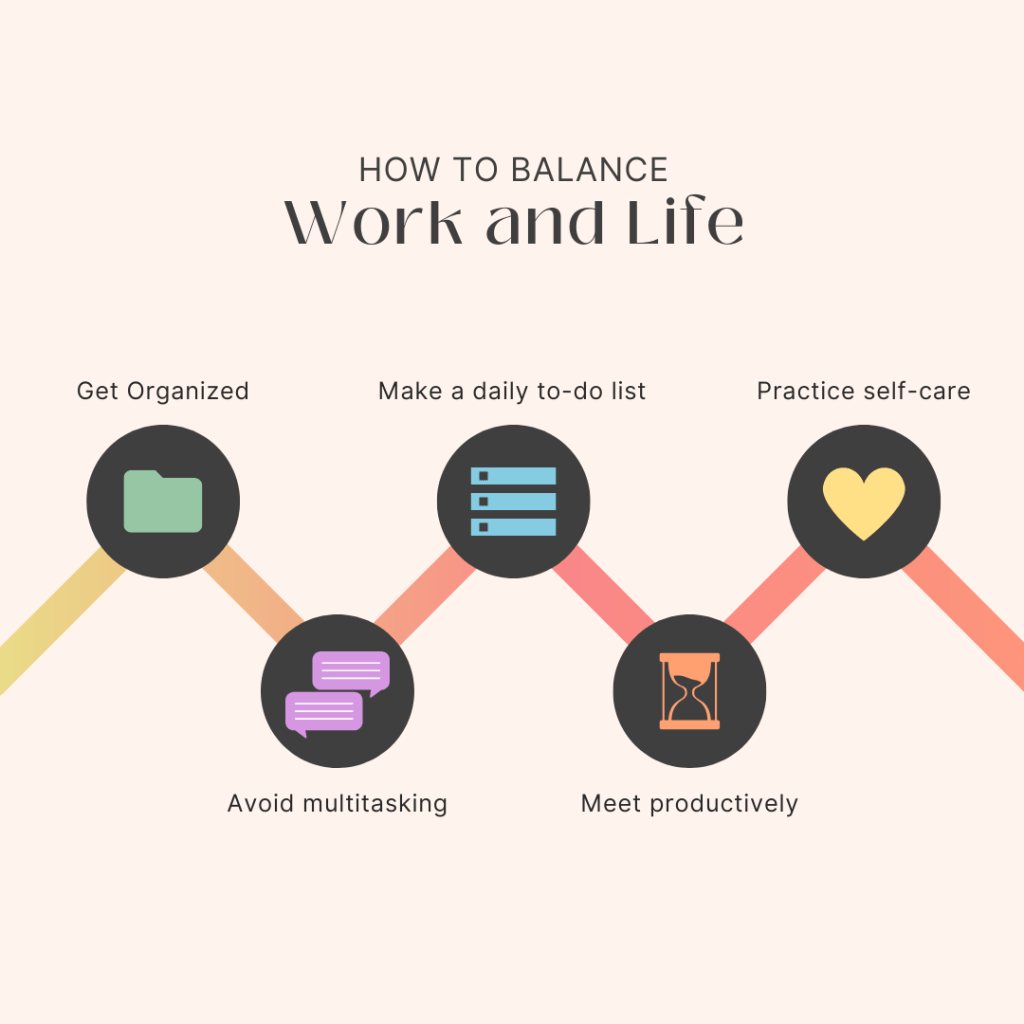
Work and life and balancing the two.

Achieving a work/life balance is something that most people struggle with, along with finding the time to fit everything else into their lives.

Implementing a work/life balance into your life is a form of caring for yourself and those around you. Once achieved it can lead to a calmer mind, better relationships, and an overall feeling of contentment.

Let’s look at some of the ways you can work towards a better work/life balance.

Understanding what work/life balance is.

When your life is out of balance it can lead to burnout. When you are burnt out you will find it hard to take care of yourself, let alone others.  Many people strive to work towards a work/life balance but fail to achieve it.

Typical things that happen when there is no balance are work piling up, a feeling of being unfulfilled, a lack of engagement in various areas of your life, and more.

The point of a work/life balance is to allow you to live your life feeling like your whole self, while successfully managing your emotions while being present in your life. Having a balance means working toward a life well lived while integrating things into your life that you enjoy.

Learning when to say ‘no’.

Saying no to projects that you don’t have time for or things that don’t fill you up is important. Where possible learn to say no to things that will fill up your time and deplete your energy. If the thought of something stresses you out, this is a sign that it is time to move on and not accept any more work where possible.

When deciding to say yes or no assess where you are at in life, think is this something that is going to help me in life, or is it going to drag me backward? Do a pros and cons list. Discuss the idea with others and see if it seems to fit with where you want to go in life, then make a decision based on your findings.

Find a job with flexibility or ask for it.

Flexibility is important in your life. Perhaps you have family commitments like dropping your children off at school, and you can’t make it to work at 8:30 am. Or maybe you want time in the afternoon to work on that project you have always dreamed of, where an earlier start might be more beneficial. Ask your workplace for flexibility to meet life demands, and you will notice a difference in your schedule, which might make life easier.

Put your health first.

You have probably heard it before. You can’t help others if you aren’t well yourself. It is like putting your oxygen mask on first, before helping the other person.

Integrate small practices into your life like getting up earlier to do meditation or exercise, building social connections with those around you, using your paid time off, and the like. Also, be compassionate with yourself if you don’t get to your practices each day.

Take your annual vacations and leave work behind if possible. Unplugging from technology can do wonders for your mental health and will allow you time to focus on what is most important to you.

Boundaries.

Set them and make them clear. If you finish at 5 pm, then make it clear to people you work with or clients that after this time you will not be responding unless it is an emergency. Shut the computer down and turn off your cell phone. If there is an emergency, give your boss your alternate cell phone number where they can reach you at that time.

Setting boundaries can help to ease up pressure on you to keep working off the clock. When starting a new relationship with clients let them know when you can respond and when you check your email. This will let them know from the get-go where and when to expect a response from you.

Work/life balance is something we should all implement into our lives. Whether it’s with work or personal relationships, maintaining a balance is crucial to our overall health and well-being.  
Using Productivity to Enhance Your Life

Productivity! It is a word we all hear, but what does it mean to be more productive in your day-to-day life? Can it mean being busy? Can it mean getting more and more done in a day?

Well, productivity is not just being busy for the sake of being busy and it doesn’t mean getting as much as possible done at the turn of a day.

Productivity is about getting things done in a strategic manner that reflects quality.

So, what can you do to make your day more productive and get the right things done? Let’s take a look.

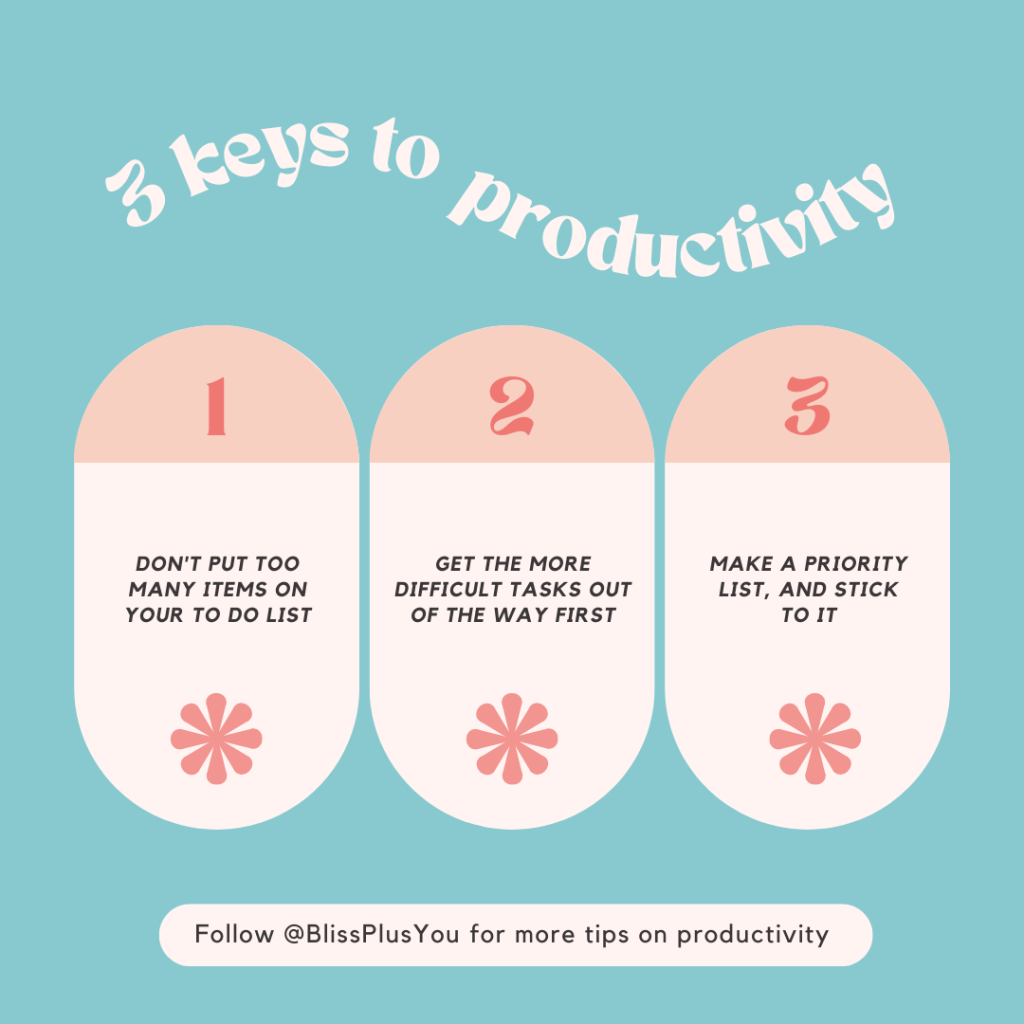
Get the most difficult task done first.

Everyone has their points in the day when they can work at their peak. For me, it is typically between the hours of 8 am to 11 am. That is when I feel that my brain is at its sharpest and my problem-solving skills are the strongest. During this time, I can make better decisions without dragging things out.   

This is also the time of day that I get the hard things done as well, whether it is writing a resume for someone or having to complete difficult tasks at work. So, this is why it is important to get the difficult things done first when you begin your work. While it is true that for some people this peak performance hour might be in the evening, then this might be the time that they sit down to begin their work, while completing the hard tasks.

Completing the hard tasks first allows you to avoid procrastination later on in the day when you might be tired and decide to put the task off to another point in time and therefore not complete it as well as you could have if you just started it first.

Get the big and crucial things done first, then give yourself a break with the small things later.

Take scheduled Breaks.

Point blank – it is not healthy to work for long periods doing anything without taking a break. Plan breaks into your day and then take them. Not only can taking a break which gives you a minute to relax, but it can also contribute to increased concentration, and reduce stress.

Have assigned email times.

Unless urgent, emails can usually wait. Many of us spend time during the day scouring through emails and spend all day answering them. 

Instead, pick a few times per day when your focus is email. For example, first thing in the morning, at 11 am, and then again at 3 pm. This will allow you to focus on your message and what is being said, allowing for more streamlined and connected communication.

Avoid Multitasking.

Not only is multitasking confusing, but it also causes stress. It can cause problems for your working memory while tiring you out faster. As humans, we are typically designed to focus on one thing at a time. Doing one thing well, then moving on to the next task is the best way to complete your work.

At the beginning of the day, make a priority list. Go through each task as your day unfolds. Once you complete the task cross it out, and if you have things you are waiting on, place a checkmark beside that task and move on to the next one. This will allow for a smooth transition from one item to the next. Allowing you to focus more and zero in on details you might miss if you multitask.

Planning.

Plan out the night before and the week ahead. Each Sunday I like to make sure that I have my schedule set out for the week ahead. I like to know what days I am going to complete what and when I am going to do them. However, as we move through the week, things can change. Appointments get canceled and things get moved around. This is why it is also important to do a quick end-of-day check over your to-do list so that you can ensure that you are set for the next day. I like to remind myself of what I have to do during the day, by checking my schedule in the morning as well. In addition to this keep the to-do list realistic. Don’t overcrowd your agenda to the point where you can’t do as much as you set out to do. 

Let’s get organized.

Clear away the clutter. File papers that you don’t need right now and make your workspace inviting. You are more likely to want to work in a space that you like rather than trying to work in one filled with clutter, paper, and the like.

A messy workspace can make you feel cluttered in your mind and can make it harder to concentrate. Clean up your space at the end of each day, to start fresh tomorrow.  

Digital distractions.

If you have to focus on something, consider putting your phone on airplane mode, and closing down social media pages and your email. Only keep open what is necessary to complete the task at hand.

On average we tend to spend a lot of time on our devices scrolling through feeds and watching videos that do not make us productive. Have set times to check in on social media so that you can respond to messages and see what is transpiring in your network.

Getting organized and being productive is key if you want to get things done. Setting up a system using some of these tips can greatly improve how you feel while implementing a steady workflow.

Persuasive Storytelling: How it can improve your job search

We all have a story to tell. In competitive industries, the ability to tell a well-crafted story can make or break your opportunity to land that new job you have been so excited about. Employers are looking for not just skills, but people. People who have the right soft skills like strong communication, the ability to work with a team, and flexibility, among many other soft skills.

Before you begin your job search you should think about what industry or role you want to work in. For example, maybe you want to be in a management role in an industry that requires working with people or customer service. In a role like this, you would need to know how to explain how you brought about results to improve the company’s progress, how you build relationships with customers, and so on. Being able to effectively explain yourself in a story before you even begin your job search will help with unexpected calls from recruiters and can help to provide clarity when writing your resume and cover letter.

One thing to note is that no matter your level of experience you do have stories to tell, whether you are at the executive level or fresh out of college. For candidates who are just out of school, you can draw on your internships, personal and school projects, and volunteer work. Recruiters typically tend to remember candidates who were confident in what they had to say and who could carry on a good conversation. The more influence you have during your conversation can help you to stand out during an interview.

So, what method do I use when crafting my stories?

There is a method that you can follow when creating your persuasive stories. It is called the STAR method (Situation, Task, Action, Result). Below I am going to break down what each section should say and what employers are looking for when you go to tell your story during an interview or conversation.

Situation – This is where you describe what you can do to help the employer solve a problem, they are looking for you to solve in the role you are applying for. When going to an interview it is a good idea to get a strong sense of what they are asking for in the job posting. Therefore, I suggest memorizing the job posting if possible. For the strong points, sit and think about how you have solved a problem based on what they are looking for.

When you begin your answer, think about it as if you were telling a story to answer the question. The key is to not give a long-winded answer but to give an answer that is engaging, interesting, and clear. Start the story by giving an idea of the environment you were in, who you were involved with and what the problem was.

Task – Move on to the task at hand. Think about what it was that you were trying to solve and be clear and concise in how you talk about your tasks. Mention your thinking process, what motivated you to take the steps you did, the tools you used, and who and how you were working with.

This part of the process can be somewhat daunting. Consider jotting down your answers on a piece of paper and reframing them into your story. As with this part you want to be once again concise, but impactful with what you write and how you plan to explain your tasks when you are in an interview.

Action – This is where you explain the steps you took. Think about explaining your action in a manner that paints a picture of what you did to solve the problem. This section will probably also require the most detail, without going off in the wrong direction. Stick to the key points when explaining this section. This is where you should be able to tell the listener where you made the biggest impact while illustrating your problem-solving abilities.

Result – Finally the result! This section is short and sweet. Explain how you finally solved the problem, what results brought about improvements, and how you were able to build relationships with those involved throughout the process.

Storytelling during the interview is meant to be engaging. This is your opportunity to build a connection with the interviewer while helping others to gain a better perspective of who you are in the process. Telling a story, no matter the content should be relatable to the listener while giving them a better understanding of who you are as a person. Letting your personality shine, along with displaying your skills are all essential during the interview process.

How to Effectively Advance in Your Career: Five Steps

Growing in our careers is something we all strive to do. Whether it is moving on to the next level in your career or changing companies, we all look for strategies we can use to get to the next level. Career changes for everyone are different, some people want to earn more money or want more work-life balance to be available to them. No matter the reason, it is important when planning your career that you take into consideration aspects of your career that meet your personal needs, values, and goals.

Let’s look at a few steps you can take to advance in your career:

Networking – Networking is key if you want to advance your career. It is important to get out there and show others what you are all about. Not only can you meet interesting people, but you might make friends along the way. In my career during the last 6 years, most of my job opportunities have come from a network that I started to build up over the years. While you can still get jobs the conventional way, it is important to get out and build relationships with people in your community and city.

Take the analogy of an iceberg. Most of what you see at the top of the iceberg is the smallest part. The bottom part you don’t see is where most of the opportunities live.  Networking is similar. Through networking, you will be able to access the bottom of the iceberg.  

Don’t know where to start networking? Try using websites like MeetUp, LinkedIn, and networking apps. There are tons if you search on your phone! These will allow you to meet people and network to gain opportunities.  Get started today! It all starts with a conversation!

Have a Vision – What does success look like for you? Every one of us has a different perception of what success looks like for us. Writing down your vision of where you want to be in 12 or 24 months is a great place to start. You can also create a vision board. (Tip: Don’t have time to cut and paste a vision board with paper? Create one in a word document that you can access on your computer for motivation.)

When creating your vision, it is important to remember to be creative and write everything down, even if the dream seems too big right now. This is okay. You can work towards those ideas through careful planning.

The most important aspect of creating a vision is to define what success looks like to you within the realm of your values. Before creating your vision, determine what it is that you value in life and create a plan based on these thoughts. This is important because if you are in a place where you don’t feel your values are being honored, it can get very uncomfortable. Come up with ideas and be creative in this process.  

Get a Mentor – If you follow my blog, you would have noticed that I have spoken about the topic of having a mentor. Mentors can provide you with valuable insight into your career and can help guide you in making decisions. Mentors can act like a sounding board, as you learn from their wisdom about your career journey. I have had a mentor in both my HR and entrepreneurship journey. Often, they can give you unbiased opinions.

If you are looking to get a mentor and do not know where to start, try reaching out to programs, alumni groups, or professional associations in your community.  These establishments will often have programs where they match you up with a mentor that would be suitable for your needs or skills. Alternatively, you can also seek out or develop a mentor in your field or place of work. These types of relationships often develop naturally.  For my mentoring blog, click here.

Set a Timeline and Goals – Do you have a specific position you would like to reach or feel like you are ready to move on to the next step in your career? One of my contacts had a goal of getting a director role within 6 months. This person felt that it was time that they moved on from the senior roles they were working in and wanted to take the next step. They decided that they wanted to make the move and they did! Within 3 months this person had achieved their goal.

Often working with a coach or a career counselor can help to get you on the path you want. Things such as structuring your resume, taking short courses in areas where you need to build your skills, and setting out a plan to reach those goals strategically will land you where you want to be. For more information on building a strategy for your career check out my strategy-building blog here.

Building your career takes focus and endurance. Things can change along the way, and you will need to learn to be flexible. If you plan your career and work towards your goals by following some of the strategies I have mentioned here (including checking out the referenced blogs) you will be able to build a plan and work towards what you want to achieve. Remember when building a career there will be peaks and valleys, and things do not always work out the way you imagined them to. The main thing is to not give up on your dreams and to stay focused and attentive.

Intentional Living: What is it and how can it help you succeed

Intentional living. It is something we have all heard about, but what it exactly and how can it help us lead better lives?

Intentional living to striving for a life that you want to live. It is about becoming concise and clear about what you want out of life and working to achieve the set intentions. It is about being committed to intentionally spending your time on things that mean something to you while building a more fulfilling and positive mindset and lifestyle.

If that sounds like something you are interested in let’s read on…

Set intentions for your day – Your day and your intentions for it are crucial for your daily living to be successful. Making deliberate decisions right from the start of the day is important. One proven method for having an intentional day would be to sit down and write out your tasks and goals. These goals do not have to be big. Just small steps to get you to where you want to be. Goals can be written out first, followed by a small task to get you to work towards that goal. In addition to these tasks that should be written out are items that you need to get accomplished such as appointments and errands.

This method will help you to know what you would like to complete in the day and will help you to see progress as it is being made. When the end of the day arrives, you will feel a sense of accomplishment as you reflect on your day.

Make your time count – Making a schedule for your day is important. Before your day begins set out a task list, and a schedule of what you would like to do with your time. This should include relationships you are building, priorities you have, and anything that needs to get done throughout the day.

When it comes to living intentionally you can also practice things such as setting boundaries and saying no when you need to. If you feel like you need to set up more structure in your day and are not sure where to start, then do a time audit. Take an inventory of how long it takes you to complete specific tasks, and then set a time limit you need to work on these tasks. If you have a report to write set aside a specified amount of time to complete the task, then complete what you can in the allotted time and save the rest for the next day if you can.

One of the biggest pitfalls that people come across is being busy without accomplishing anything. Therefore, it is important to be results oriented.  You can be busy all day and at the end of the day feel like you have not accomplished anything. This is something that you want to avoid. It is important to select specific things you want to accomplish each day and plan to work towards them. In addition to this, try to avoid multitasking. Focus on one thing at a time, make the work that you are doing count, and work towards accomplishing the goals you set out for yourself that day.

Review your goals – Do a weekly or monthly goal review. Being clear on what you are working towards and revising goals as necessary to achieve what you set out to do. Goals should be flexible and adaptive to changes in life.

Something important to note when working on your goals is to not turn down other good opportunities when they come up from time to time. This is not to say that you should stop your goals when different opportunities arise, but rather think about these opportunities in a manner to see how they can help you in the long run.

Intentional living is an important practice. Choosing things that fill you up when it comes to using your time wisely, making and working towards your goals, and setting intentions for your day or week are important. The bottom line is that you want to practice a life that is rewarding and fulfilling by making the best use of your time.  

What Can Good Time Management Mean for You?

Good time management.

What does that mean for you?

In a nutshell time management is a great opportunity to get your priorities and tasks in line while working to arrange and organize your life. When you manage your time well you will be able to take part in things that have meaning for you, complete tasks that you normally don’t have enough time for, and accomplish things that you might otherwise have a hard time completing.

Can you imagine what life would be like if you have enough time and resources to live a more productive life while achieving the things that you wish you could? While it may be true that people live very hectic lives with long commutes (I once did one that was 2 hours one way), family priorities, and school, among other things that need to get done. Many people think “I already have so many things happening, how can I possibly make time to add more to my schedule?”. While this thinking may be true, however, if you take the time to understand what you are doing with your time and work to arrange things such as working towards a goal or making more time for yourself then you will see the types of benefits this will reap!

Let’s look at a few ways to effectively manage your time to achieve your goals. If you are looking for solid goal-setting ideas, check out my goal-setting blog here. But, for now, let’s move on to time management strategies!

First things first…

Ask yourself, where do I waste time? Most of us have a bad habit of spending more and more unproductive time just scrolling on social media. While it is good to go on social media to see what is going on in news or with our friends, it is the pointless scrolling that can eat up a lot of our time. Try to schedule a time during the day when you want to catch up on social media and messages and then leave it at that. If you find other productive things to distract yourself with, such as reading, spending face-to-face time with family and friends, or catching up on some work then you will feel more productive at the end of the day. This can also lead to an increase in confidence.

While many people may use social media for their jobs, which is a completely different category, you might find it helpful to once again schedule certain times of the day to complete these tasks and respond to messages, rather than jumping in headfirst and spending half of your day responding.

Before you completely get into determining where you are wasting time, create a list of what you do in a day, and where you are spending your time. Write down how much time you are spending on each task. Then by the process of elimination take out things you spend your time on that aren’t as productive and replace them with productive things. Now by saying this, I am not suggesting that every waking moment you have to be doing something, always keep in mind that self-care and rest are extremely important.

Next, create a schedule…

Creating a schedule using an app, your phone, or just an agenda or piece of paper are all ways to record what you need to do with your time. Always keep in mind that flexibility in your schedule is important as well. Be sure to carve out time to answer emails and messages, times for technology tasks such as posts or anything related, and carve out time for your daily work and self-care time daily, whether it is in the evening or morning. Have time to wake up and a planned time to go to sleep to ensure that you are getting the proper amount of rest.

Before you start your week write out a to-do list and then schedule everything in your calendar where you think it would be the best time to complete these tasks. Ensure that you pick a time and date that work when you are most optimal in that task. Also, select a due date for yourself, and stick to it. Keep in mind that what works for one person in the morning, may work better for one person in the afternoon. Everyone’s biological time clock is different, and it is important to follow the flow of your time clock.

In addition to your list and schedule, when creating it, highlight what is the most important and make sure that those tasks are accounted for in your schedule so that they take priority and get completed. Now, we all have those small administrative tasks that need to get done such as dropping off mail, paying bills, making appointments, and whatever else needs to get done. Schedule those in too. Do you have dinner with a friend on Wednesday at 7 pm? Schedule that in too. Finally, and this is the most important take I feel, schedule your sign-off time for the day. When you sign off in the evening or whatever time you have planned, ensure that your alone time or time with family is sacred and spent enjoying things that life has to offer.

Don’t try to do it all…

What I mean by this is that you should focus on one task at a time. Multitasking in all its glory seems to be harmful at times. It is better to focus on one thing and then move on to the next. Are you in the middle of something important, like drafting an important email, and the phone rings? Let it go to voicemail and then call the person back so that they can have your undivided attention, rather than only half-listening to what the other person is saying. This will allow you to be more present in the task at hand.

In addition to this, eliminate distractions. Close down social media and email when you are trying to write or focus on a meeting. Airplane mode or do not disturb mode are great for this. In addition, word has a focus button at the bottom right-hand of the page that can help you focus on what you are doing when writing important documents.

Finally…

Once you have your schedule in order, get yourself organized. File things away, make a pile of things that need attention, and work on those tasks from there!

Bottom line is that to have an intentional life, you need to be organized and manage your time well. When organizing your life learn to say no to things that do not serve you and yes to the things that do!

How Can Effective Critical Thinking Help You in the Workplace and Life?

Critical thinking is a keystone in the workplace and your personal life. Critical thinking can help you improve your overall problem-solving strategies while getting ahead of the game regarding projects or tasks you must complete. Sometimes in life and work, we will have things that must get done to keep things running efficiently. So how do you incorporate critical thinking into your life to be more efficient and to obtain overall better results?

Let’s first look at what critical thinking is…

Critical thinking at its best level is the ability to avoid bias and emotional responses while thinking reasonably. It involves you making decisions based on facts, and reasoning, which can also be thought about in a manner that is beneficial to all, rather than just doing something the way it’s always been done. In short, critical thinking can be thought of as innovation.

How does critical thinking work?

When it comes to critical thinking you must make decisions and solve problems in a manner that can take time. As we live in a world that is all about instant gratification. Critical thinking requires that you take the time to thoroughly examine all the pieces of the puzzle while asking “why” and “how” questions. When practicing critical thinking take the time to gather facts, ask questions, and effectively put the pieces of the puzzle together.

How to use critical thinking in your life and work

When people practice critical thinking, they tend to make the best decisions and be the best decision-makers. These people tend to excel in relationship building, relating to others, communicating important information, and strategy development, among others.

Regarding the workplace, employers will often seek out how good your critical thinking is during the interview process. If you practice critical thinking on the regular, then you should be able to explain the processes you follow to solve problems during an interview.

When using a critical thinking approach first start with an open mind and think about different outcomes if you approach the problem in different manners. Be receptive to different ideas, facts, and opinions. Also, work through avoiding any biased stance. Look at each situation independently.

Once you have gathered your ideas, it is time to communicate the outcome. When explaining your outcome be inclusive and clear in your reasoning. Remove any emotions and help to ensure that everyone understands your reasoning.

Critical thinking is a tool that everyone can use in all aspects of their lives. While it may take some practice to become balanced when utilizing critical thinking, implementation and time-critical thinking is a process that will help you make more well-rounded decisions in both your personal and work life.

Improving Your Career with a Mentor

Many people are looking for ways to boost their careers through meaningful interactions. Whether you are looking to boost your career through networking or professional development, considering mentorship is a strategy that will help to start your career insightfully and constructively.  

When I first started my career in Human Resources over 10 years ago, I sought out a mentor who was able to give me insight into the industry that I would have never thought possible. Mentorship is a relationship that can help you gain awareness in your industry that simply reading a book or online article might not provide otherwise.

I have always based my mentoring, whether being the mentor or the mentee, on a relationship that you build upon in a giving manner. Remember, a mentor relationship should be a two-sided relationship where you learn from one another.

With this being said let’s look into the top three ways a mentoring relationship can help boost your career:

Construct the relationship from the beginning – Constructing the relationship from the beginning in aspects of deciding on goals and what direction you want the relationship to go in is important. Before you meet with your mentor set up some goals that are simple and attainable. If you have a direction in the relationship, then your time together will be spent more productively. Another thing to consider is thinking about who you would want as your ideal mentor. Never go with a mentor for the sake of a mentor, having someone with things in common will help you to build a relationship and learn from one another.  

Learn for other people’s mistakes – When you have a mentoring relationship, you can learn insight into your industry that might not have been assessable otherwise. You can share ideas about experiences you are having in your career while hearing about relatable stories or strategies that can help you look at situations in a more productive way. Use these conversations as a looking glass into your future career, and learn from your mentor’s wisdom about the industry you want to work in.

Build a collaborative giving relationship – Being in a mentor/mentee relationship can be one of the best learning experiences in your life. I know for me it was an opportunity to learn about my industry and the growth my mentor had in the Human Resources field. Take the chance to understand their career growth track, among other things they did to grow their career. Don’t be afraid to ask questions about topics such as their education and professional development, what they wanted to be versus how they got to where they are now, or how well networking worked out for them. While you are building this relationship don’t be afraid to offer up help as well. For example, are they a manager looking to hire in a position that you aren’t interested in? Consider connecting them with someone you know that might be suitable for the job.

Getting a Mentor

Getting a mentor can be done in a few ways. First, some professional associations and clubs offer a mentoring service as a part of their membership. They will do the matching and will help you start the process. If you are a part of a professional club, alumni association, or anything of the sort, then consider signing up for this service and let them help you to arrange a mentor.

The second way is to seek out a mentor from your network. Now it is true that mentoring relationships can happen naturally, but most times you will have to search for one. Mentors can be managers, more senior people in your organization, or people in your network. Once you have decided who you would like to be your mentor you can simply ask them, or you can let the mentoring relationship grow naturally by building a collaborative relationship through sharing experiences and thoughts. Just be sure that you have gotten to know the person well enough and built enough trust before you ask for the mentoring relationship.

Mentoring is an invaluable experience that all professionals should have when making career changes, especially in the early stages of their careers. Determining what you want from the relationship, along with what the other person is looking for are both important. Remember to keep the relationship simple and collaborative, and you could build a lifelong relationship.  

Video Resumes and Interviews! What are they all about?

It is a new thing, and yes, they do exist! Video resumes or videos are becoming more common as part of the recruitment process. I have had to create a few videos of myself to submit a job application or as a step in the recruitment process. Video resumes can be daunting and nerve-wracking, but not to worry, there are ways to make the process easier and even fun!

So why would an employer want a video of you to begin with?

Employers are looking to see how you present yourself, and how well-spoken, and creative you are. These are only a few reasons among many others, but overall, they are looking to see what you are like as a person.

Some may argue that if a person becomes nervous while recording themselves and then reviewing their content this could take away from their actual personality. This is true on many accounts, myself included at times.  But there are ways to get out of the prerecording jitters and create great content that will make an employer want to move on to the next step with you.

Confidence – Dress the part. While it may be easy to do your hair, put on make-up and wear a nice shirt and wear yoga pants before you sit in front of a camera, the best suggestion is not to. Dress the part in its entirety. If you must record a video for an employer prepare from head to toe (shoes included) how you would if you were going to an interview. Dress in professional attire and look presentable for your video. Avoid anything too trendy and stick to a business look that is in your style. It has been found that employers are more likely to pick a candidate that dresses appropriately, over someone that did not look the part if it comes down to you and one other candidate.

Also, smile, speak clearly, and practice your answers before you begin recording.  

Know what technology the employer is using – Is it live or are they asking you to record the video and upload it to a platform? If they are asking you to record it and upload the video, this will give you a chance to review your video before you send it. This will also allow you the opportunity to do a couple of takes to determine which video you like the best.

Some employers will use technology that will have predetermined questions to answer, and you will have to answer questions on the video, after this, the program will send the technology to the employer. The best way to work with this type of scenario is to practice common interview questions such as “Tell me about yourself” or “Tell me about a time you solved a problem”. To calm your nerves before submitting this video practice common interview questions, while thinking about what the company is looking for and the role you are applying for.

Prepare for the video as you would an interview – Think about what the employer is looking for, which is typically for someone to solve a problem. When you step into a new role the main objective is to complete tasks that the employer is assigning, helping them to progress their business, and to solve problems. Study up on interview questions related to the job and industry at hand and explain your resume about the open job. One thing you do not want to do is simply read out your resume. You will want to explain it in an engaging manner while showing your personality and qualifications for the job.

Attitude – Having a positive and engaging attitude is key, this is for any new job prospect. Employers are looking for candidates who can grab their attention and show what kind of fit they are for the organization. So, speaking clearly, smiling, and giving crafted answers to questions or what the employer is looking for are key.

Overall, when creating a video resume or preparing for a pre-recorded video interview in the beginning stages of the recruitment process is it important to treat it the same as you would an in-person interview. A polished appearance, good attitude, and strong knowledge of the job at hand are all important. The most important thing to remember is to have fun with it and let your personality show!

Want to Grow Your Career? Read This!

Are you looking to grow your career this year?

Right now, more than ever professionals are looking for ways to manage and take their careers to the next level. With a more than ever educated workforce, individuals are considering upgrading their skills, moving into the next promotion, and switching companies or industries altogether.

Career growth is different for everyone, for some it might be a more lateral move to learn more about their industry in a similar role with different responsibilities, or it could be about moving up into a director role. Professional growth also comes in obtaining professional designations, improving existing skills, or taking on new experiences.

Strategies to Grow Your Career

Be clear about what you want – setting clear expectations with yourself and those who you work with is important. If you want to move into a manager role within your current company or industry, look at what others have done to achieve such a goal. Check out LinkedIn to see what other people have studied, volunteered with, or the types of roles they did to get where they are now. One important thing to keep in mind is that not everyone’s career paths are the same, so a position that might have taken one person several years to get to, might take less for others to achieve. However, getting an idea of what others are doing might give you ideas as to activities you can take part in to gain new skills and experiences.

When making your plan consider alternative opportunities such as volunteering or joining a board of directors to give experience or to share your expertise. These methods are also a great way to network and potentially find your next job opportunity.

Setting goals is also effective when setting yourself up for your next career move. Do you have a degree or professional designation you want to finish? Or simply need new connections? What about learning new software programs? These are all aspects of your career you could consider looking into to add to your resume and make your skills more marketable. When setting goals break them down into smaller tasks of what you need, or who you will need to connect with to make a strategic plan. For more information on goal setting, check out my other blog here.  

Let’s look at a few other strategies to use when looking to grow your career:

Building New Relationships – Networking is key. You probably hear this a lot. People are often not too sure if networking works, but the truth is that networking has lasting effects that will benefit you in the long term if you maintain healthy relationships with those that you connect with. Networking has a lasting effect if you go into a networking relationship as someone who is looking to help others out. Reach out to others who are looking to network and see where you can collaborate while building sustainable relationships. Networking can lead to business opportunities and employment.

Professional Associations – Joining a professional association was probably the best investment I have ever made in my career. Most professional associations have opportunities to volunteer, which leads to networking, along with chances to attend professional development sessions and classes. If you work in an industry that has designations, there is a good chance that your association offers those classes or can connect you with where to take these classes. Along with this associations offer discounts on things like insurance. Joining one of these groups has long-term opportunities that pay off in the long term, plus you get the chance to meet new people along the way.

Building New Skills – Taking courses and rebuilding your skills to the next level is paramount in staying relevant in your professional life. Getting small certificates up to a professional designation are both important. While attending classes you get a chance to meet new people, while learning. Employers are always interested in individuals who are looking to grow professionally and personally. Continuing education also helps you to stay relevant in your industry (which can be the answer to an interview question in some interviews). Also, reading books on business, personal growth, or anything related to your profession is a great way to build your skill portfolio.

Career Planning – Career planning sessions with your manager, coach, mentor, or even by yourself can prove beneficial. When you are planning your career and writing out your goals you can brainstorm and be creative with what you want to do. This is where some creative ideas are born! When career planning with a mentor or manager be honest about where you want to go in your career. When I first started my career as a Customer Care Representative, I was honest with my manager that I wanted to work as a Recruiter, and she found a way for that to happen for me. I eventually ended up moving into the Human Resources department of the company I was working for. So don’t be afraid, to be honest about where you want to go with your career when given the opportunity. For more strategic planning opportunities check out my other blog here.

Career growth is both a give and take relationship, however, the focus should be always on seeing where you can help others and develop relationships. Building new skills and showing up is also important. If you know where you want to go with your career surround yourself with people who are where you want to be and learn from their expertise.