How to be Good at Interviews: An Overview

Interviews – some are good, and some are bad.

Sometimes we think we sunk when we did well, and vice versa.

Let’s talk about how to make interviews less daunting, and more productive while being more prepared. In this blog post, I am going to talk about what preparation should happen before, during, and after a job interview, rather than talking about what questions you should answer and how.

Before the interview…

So, you got the call or email. The company called for a job you are interested in to set up an interview and they have told you what you will need to do to prepare for the meeting. 

You have three days. Here is what you should do:

  1. Research the company again. Chances are while you were applying, you at least read the job posting and gave the company website a glance. And chances are that you probably also know that you will likely be asked during the interview what you know about the company. So, this is your chance to do some in-depth research about the company. For example, go over their website in more detail than just the ‘about us’ section. Read their blog, read their careers page, watch videos they have, go to the bottom of the homepage, and read the different links they have so that you can get a well-rounded view of the organization.  Another thing you can do is read news articles about the company, which can be found by a simple google search.

What about employee reviews? Look on websites like glass door and indeed to see what others are saying about working there. Now keep in mind that these reviews are opinions of other people’s experiences at the organization. If there are bad reviews, it does not always mean that the experience working there will be bad. Each person’s experience will be different.

  • Review your resume – Review and memorize the resume that you sent to the employer. For each job you apply to, you should always be tailoring your resume, cover letter, and/or application to the job posting. It is always wise to have a good idea of what the employer is looking at. Now you are probably thinking, I already know what is on my resume! The reason I suggest this, is because we often apply for several jobs, with several tailored resumes, so it is a good idea to have it fresh in your mind what you are presenting to the employer.
  • Prepare all tasks they ask you to do before you attend the interview. These days employers are commonly asking candidates to prepare short presentations, complete writing tasks, create videos, and the like before they attend the interview. Make sure you do this well in advance to give yourself time to practice the small presentation they ask you to do, or to proofread the questions or assignment they wanted you to complete. If it is a presentation, practice in front of someone, or if you don’t have someone to practice in front of, do a video recording of yourself presenting and watch it. The important thing is to prepare what you need to do in advance so that when the interview happens you will be well prepared.
  • Practice interview questions and have your questions prepared to ask. Print out the job posting and memorize it for the interview. Have interview answers prepared that you could use to answer various types of interview questions. Situations like problem-solving, team building, conflict resolution, behavioral answers, and the like are common in interviews. You should have what is called a STAR (Situation, Task, Action, Result) prepared. STARs are great because the answer is broken down, and you will be able to explain your answer to the employer based on the question they are asking you.

Having the questions that you want to ask during the interview is also important. Do not have questions like how much is the salary and what are the benefits. Have more constructive questions about the company, the culture, growth, etc., and about the opportunity itself. These types of questions will make you look genuinely interested in the role while showing that you did your research.

During the interview…

  1. Arriving at the interview – Always plan to be at least 15 minutes early to the interview. Plan for things like not being able to find parking, finding your way around, and not looking rushed and frazzled when you arrive.

Another thing is to dress the part. I know that this is common sense, but I can’t tell you how many times I have had people arrive for interviews not dressed properly, or who have brought their family members or spouse with them. The rule of thumb is to arrive at the interview with just yourself dressed professionally. When you greet the person at the front desk always be polite. The front desk clerk is typically the person who gets the first impression of you, and if it is not a good one, chances are they will tell the interviewer what their encounter with you was like if it was not pleasant.

  • Meeting the interviewer – Always stand up, shake hands, and say “hello [insert name here], nice to meet you”. Or something along those lines. When you arrive in the interview room ensure that you thank them for inviting you to the interview and make eye contact. Answer all the questions to the best of your ability. If they ask you a question and you need a minute to answer it or need the question repeated, feel free to politely say so.  Also, ensure that your answers are not too long, but also not too short, and answer the question directly, try to avoid going off on a tangent.

After the interview…

  1. When the interview is over – Thank the interviewer again for their time and that you are looking forward to hearing from them! Always offer a handshake before and after the interview. It should go without saying, but a handshake should be firm, but not squeezing their hand, and not a limp handshake either. A firm handshake shows confidence.
  • Reflection – When you get home reflect on your interview. Think about how you did well, and where you can improve your answers for next time. Always do this as soon as possible so that the conversation is still fresh in your head! Reflection is a strong building blog that can foster self-growth and preparation for future events in your life.
  • The thank you email – The email should be simple and to the point. Address the people you met with, tell them what interested you in the role, thank them for their time, and reiterate your skills and how you feel you could help the company. Not many people send thank-you follow-ups, so this can be one way to stand out from the crowd. Also, send the letter within 3 days of the interview taking place.

So, there you have it. Basics of before, during, and after the interview. Preparing for an interview is daunting because you want to make the right impression. By taking your time, preparing, and executing your plan the interview process will be easier.  

Looking for interview coaching or specific suggestions? Get in touch with me via the contact page on this website or via Instagram @BlissPlusYou.

How to be Good at Interviews: An Overview

Interviews – some are good, and some are bad.

Sometimes we think we sunk when we did well, and vice versa.

Let’s talk about how to make interviews less daunting, and more productive while being more prepared. In this blog post, I am going to talk about what preparation should happen before, during, and after a job interview, rather than talking about what questions you should answer and how.

Before the interview…

So, you got the call or email. The company called for a job you are interested in to set up an interview and they have told you what you will need to do to prepare for the meeting. 

You have three days. Here is what you should do:

  1. Research the company again. Chances are while you were applying, you at least read the job posting and gave the company website a glance. And chances are that you probably also know that you will likely be asked during the interview what you know about the company. So, this is your chance to do some in-depth research about the company. For example, go over their website in more detail than just the ‘about us’ section. Read their blog, read their careers page, watch videos they have, go to the bottom of the homepage, and read the different links they have so that you can get a well-rounded view of the organization.  Another thing you can do is read news articles about the company, which can be found by a simple google search.

What about employee reviews? Look on websites like glass door and indeed to see what others are saying about working there. Now keep in mind that these reviews are opinions of other people’s experiences at the organization. If there are bad reviews, it does not always mean that the experience working there will be bad. Each person’s experience will be different.

  • Review your resume – Review and memorize the resume that you sent to the employer. For each job you apply to, you should always be tailoring your resume, cover letter, and/or application to the job posting. It is always wise to have a good idea of what the employer is looking at. Now you are probably thinking, I already know what is on my resume! The reason I suggest this, is because we often apply for several jobs, with several tailored resumes, so it is a good idea to have it fresh in your mind what you are presenting to the employer.
  • Prepare all tasks they ask you to do before you attend the interview. These days employers are commonly asking candidates to prepare short presentations, complete writing tasks, create videos, and the like before they attend the interview. Make sure you do this well in advance to give yourself time to practice the small presentation they ask you to do, or to proofread the questions or assignment they wanted you to complete. If it is a presentation, practice in front of someone, or if you don’t have someone to practice in front of, do a video recording of yourself presenting and watch it. The important thing is to prepare what you need to do in advance so that when the interview happens you will be well prepared.
  • Practice interview questions and have your questions prepared to ask. Print out the job posting and memorize it for the interview. Have interview answers prepared that you could use to answer various types of interview questions. Situations like problem-solving, team building, conflict resolution, behavioral answers, and the like are common in interviews. You should have what is called a STAR (Situation, Task, Action, Result) prepared. STARs are great because the answer is broken down, and you will be able to explain your answer to the employer based on the question they are asking you.

Having the questions that you want to ask during the interview is also important. Do not have questions like how much is the salary and what are the benefits. Have more constructive questions about the company, the culture, growth, etc., and about the opportunity itself. These types of questions will make you look genuinely interested in the role while showing that you did your research.

During the interview…

  1. Arriving at the interview – Always plan to be at least 15 minutes early to the interview. Plan for things like not being able to find parking, finding your way around, and not looking rushed and frazzled when you arrive.

Another thing is to dress the part. I know that this is common sense, but I can’t tell you how many times I have had people arrive for interviews not dressed properly, or who have brought their family members or spouse with them. The rule of thumb is to arrive at the interview with just yourself dressed professionally. When you greet the person at the front desk always be polite. The front desk clerk is typically the person who gets the first impression of you, and if it is not a good one, chances are they will tell the interviewer what their encounter with you was like if it was not pleasant.

  • Meeting the interviewer – Always stand up, shake hands, and say “hello [insert name here], nice to meet you”. Or something along those lines. When you arrive in the interview room ensure that you thank them for inviting you to the interview and make eye contact. Answer all the questions to the best of your ability. If they ask you a question and you need a minute to answer it or need the question repeated, feel free to politely say so.  Also, ensure that your answers are not too long, but also not too short, and answer the question directly, try to avoid going off on a tangent.

After the interview…

  1. When the interview is over – Thank the interviewer again for their time and that you are looking forward to hearing from them! Always offer a handshake before and after the interview. It should go without saying, but a handshake should be firm, but not squeezing their hand, and not a limp handshake either. A firm handshake shows confidence.
  • Reflection – When you get home reflect on your interview. Think about how you did well, and where you can improve your answers for next time. Always do this as soon as possible so that the conversation is still fresh in your head! Reflection is a strong building blog that can foster self-growth and preparation for future events in your life.
  • The thank you email – The email should be simple and to the point. Address the people you met with, tell them what interested you in the role, thank them for their time, and reiterate your skills and how you feel you could help the company. Not many people send thank-you follow-ups, so this can be one way to stand out from the crowd. Also, send the letter within 3 days of the interview taking place.

So, there you have it. Basics of before, during, and after the interview. Preparing for an interview is daunting because you want to make the right impression. By taking your time, preparing, and executing your plan the interview process will be easier.  

Looking for interview coaching or specific suggestions? Get in touch with me via the contact page on this website or via Instagram @BlissPlusYou.
Leadership in your career and life

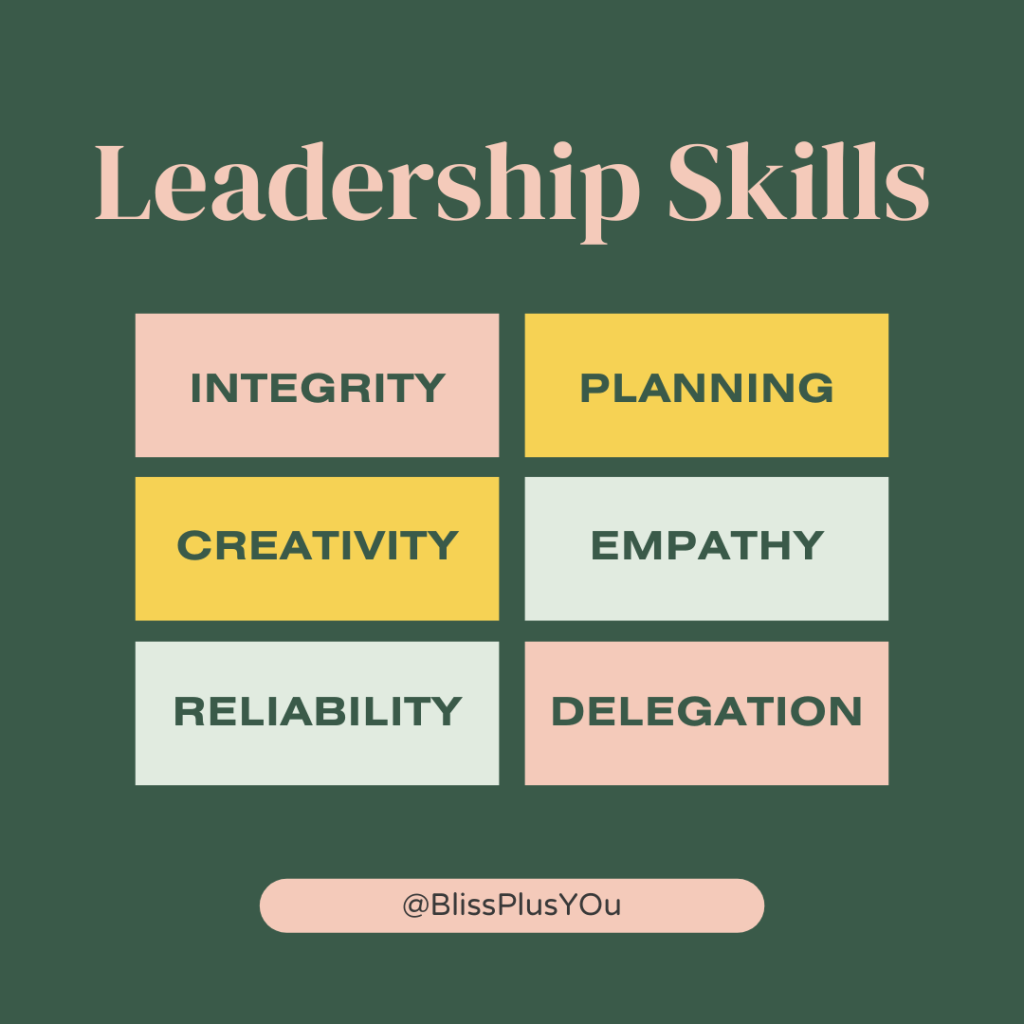
Leadership is a skill that is very important to develop in today’s competitive job market. Do you often think to yourself what can I do to improve my leadership in life and work? When you have been set in a position that requires you to lead others through their career, sports, or just in life you must use skills like communication, coaching, listening, accountability, and delegation, among many more to effectively engage others, while earning their trust.

What makes a good leader?

Strong leaders are often able to engage others in a motivating manner while helping them to succeed and reach their goals. They can take feedback as a learning opportunity to not only improve their performance but to also help improve the performance of their subordinates as well.

Leaders should listen to others and help the people they support to build strong careers or plans of action that are executable and easy to understand. Leaders should strive to be inspiring and be a place of support in a workforce that is constantly changing in today’s world of work.

Top leadership skills

  1. Committed

As a leader, you need to demonstrate commitment to your work. This means following through with what you promise to do. Showing dedication and excellence in your work is important. Setting the stage of commitment shows a strong work ethic, which when demonstrated will usually trickle down to your employees. This does not mean working endless hours, but it does mean going the extra mile when you need to and showing your employees that you will support them when they need assistance in the workplace.

  • Communication

Strong communication skills are needed in every role, from working in a restaurant to taking a customer’s order to working as a manager in a corporate office. In addition to this listening to what people are telling you, not finishing sentences, or dismissing what people are saying to you are all essential in the workplace.  You should strive to be clear while explaining things to your employees in aspects of policies, daily tasks, and anything else related to the organization you work in. When an employee comes to you with a concern, you should listen to them and hold space for them to be heard. This can help to build stronger relationships in the office while increasing collaboration and teamwork. In addition to this, you should be clear in all forms of communication from emails and phone calls to in-person communication.

  • Delegation

Never take on too much. As humans, if we try to be a jack of all trades we will end up not being good at anything and will likely make more mistakes along the way. Many people are worried that if they delegate too much they will look like they are not good at their job. However the opposite is true, if you focus on the main aspects of your job and delegate the tasks that others can do then you will end up with a stronger team. Everyone will feel better knowing that they have contributed to an overall project as a team. Before delegating tasks, select employees that will be the strongest in the tasks that need to be done, then assign the task to them. 

  • Inspiring and Creative

With the way the workforce is changing often having an inspiring manager is like a breath of fresh air to many employees. Being inspired and adding creativity to your work can keep the mundane tasks interesting while keeping your team interested in knowing what is going to happen next. A positive environment will keep things interesting and can also help to improve employee retention if people feel good about going into the office each day. Think of unconventional ways to keep projects interesting, reach out to customers that you might not normally think to get business from, and hold brainstorming sessions where you get input from your employees to make a project better or to expand on them.  

  • Motivation

Motivation in the workplace is more than just a games room and a high salary (although both are nice). It is also about allowing your employees to make decisions and use their judgment in some matters, autonomy, asking and implementing employee interests, making a productive but not overly stressful work environment, team building, and more. Employees want to feel engaged in the workplace. On the point of not overly stressful workplaces – the reference here is that all jobs come with some form of stress. Work should be challenging because it helps us grow, but it should not be so stressful that it takes over your life and affects your health and well-being. Also, helping employees to be confident in their work and selves is a strong motivator in the workplace.

Looking for more information on workplace wellness? Check out other blogs on my website, contact me via the contact page, or connect with me on Instagram @BlissPlusYou.

You and your well-being in the workplace

We have all heard about it.

Employee well-being in the workplace and how can we achieve it?

There are also many terms used interchangeably that describe employee well-being. Some of these terms include employee happiness, satisfaction, etc. While we cannot always control what goes on in the workplace, what we can control is how we react to it. This article is going to focus on what employees can do to improve their workplace well-being.

Employee well-being focuses on aspects of your physical, mental, and social health. Aspects that are also covered under workplace well-being include cognitive, emotional, environmental, and physical body. As individuals, I always stress that we need to turn inwards to create our most authentic and peaceful selves. With all the outside stressors we have in our world, it is important to get our minds in order through various exercises we can do and resources we can tap into to become a healthier version of ourselves. 

Let’s look at some ways you can work to improve your workplace well-being:

  1. Tap into your Employee Assistance Program – Often called EAPs, these programs allow employees to access services such as counseling, finance management, health, and more. These services are confidential and can help you with your mental health, stress management, and anxiety, just to name a few. Typically, these programs are offered via phone and are flexible for scheduling based on your personal needs. If you have this benefit from your employer, be sure to check this offer out when needed.
  • Plan your long-term goals – Think to yourself, are you planning to stay with your employer for the long term? Or is it just a stepping stone to get you to where you want to be? Think about where you want to be and set up an achievable 5-year plan. I find that five-year plans happen and manifest themselves if I write them down and decide when I want to achieve them. Of course, you should still break down your long-term goals into short-term achievable goals as well.
  • Stay fit – We all hear over and over that you will be healthier emotionally if you exercise. This doesn’t mean that you must hit the gym and do hard-core exercises. What it means is that you should do things to keep your body active and in shape. Typically people who work out or stay active achieve better physical and mental health. In addition to that, check to see if your employer offers discounted or free gym memberships! Some offices even have a gym on-site.
  • Get to know your co-workers – Getting to know your colleagues is a good way to build up your social life. You do spend 40 hours a week with them, so why not get to know them and make some friends while you are at it. Building relationships both in and out of the workplace are equally important. When you are having a hard day at work, it can be nice to have a friendly face to chat with. Also, if there is an event planning committee join them and help to arrange work picnics or dinners outside of the workplace.
  • Be an encourager – Everyone likes to be encouraged. Help others feel their best by giving and receiving encouragement. If your manager or coworkers give you feedback as to how you can do something better, take it with grace and use it as a learning experience. A shift in perspective can greatly improve your outlook if you understand that the feedback you get is only to improve your performance, rather than hinder it.
  • Make your environment your own – Do you have your own office or workspace in your workplace? If so, make it your own. Bring some pictures, desk items, and things you use daily to make you feel more relaxed and at ease. If you have a little touch of home in the workplace then you can perform better, while helping to alleviate stressors.   
  • Flexible scheduling – If your workplace offers the ability to let you choose your hours in the workplace then take advantage of it. Do you need to leave early to pick up your kids from school? If so, consider speaking with your manager about scheduling your day around allowing you to take care of life outside of work. This perk can be a game changer when it comes to you improving your work/life balance if you take advantage of it.

While these are only a few of the ways you can take care of your well-being in the workplace, consider taking advantage of all the benefits your employer offers you. Workplace well-being and taking care of yourself are very important factors in helping you to perform at your highest ability.

Want to talk more about work and career strategies? Connect with me via the contact page or follow me on Instagram @BlissPlusYou

Easy Early Morning Routines

Getting up early and starting your day can set you on the path of having more productive and meaningful days. When you get up early not only do you have more time to make yourself a priority, but you also have time to accomplish things you normally would not have time for, and therefore you reduce the stress that rushing around in the morning can cause.

When you get up early you will want to make sure that you have a plan, so that you are not just getting up early, for the sake of getting up early. Try to fill your mornings with activities that motivate and inspire you, this will help for a more relaxed and put-together day.

Activities for an early routine

Looking for some ideas to get you started? Let’s take a look:

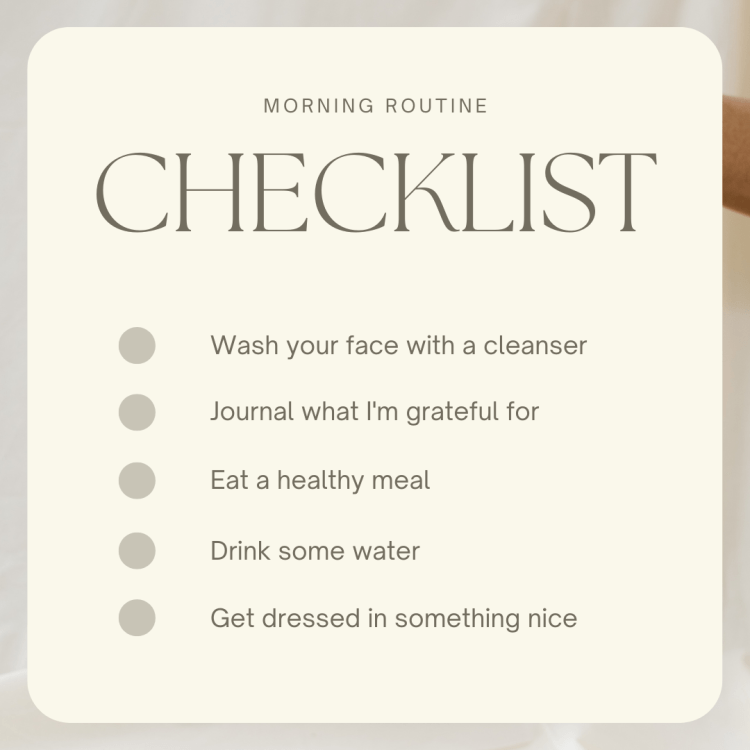
Meditation and breathing – Meditation and breathing help to get oxygen to your brain and help with lowering stress levels, while promoting overall well-being.  You can meditate through guided meditations or just on something you cherish. If you are new to meditation, start small then work your way up to longer meditations.

Exercise – Getting active even if it is just for 15 minutes in the morning to wake up your body is beneficial. Getting your heart rate up and stretching out your body will help to improve your body in the long term while working to give you more energy, improve brain function, and overall mood improvements.

Goals and productivity – Make a to-do list and write out your goals for the day. Personally, when I start my day without looking over my daily task list, I often forget important things that I need to complete and feel less put together. Creating or looking over your to-do list is a great way to schedule your day while ensuring that you don’t miss any appointments or commitments. Also, set small bite-size goals for your day. And remember not to overdo it, ensure that you have enough time during your day to complete all of your tasks so that you aren’t overloaded.

Nutrition – Eating well and getting hydrated are also both important when starting your morning off. Overnight we get dehydrated from not drinking water for several hours. Drinking a glass of water can help to wake you up and get you started for the day. Also, eating a balanced meal will help make your morning run smoother so you can focus on your work, rather than hunger.

Don’t hit that snooze button – Hitting the snooze button puts your body back into a rest state which makes it harder to get up. If you hit the snooze button too much there is a good chance that you will wake up feeling more tired. Ensure that you go to bed the night before at a decent time, allowing for at least 8 hours of sleep.

Here are a few other convenience tips to get you going in the morning:

  1. Pre-set your coffee machine to make coffee for you in the morning.
  2. Make your lunch the night before.
  3. Decide what you will wear the next day the night before.
  4. Clean up your space before bed, it will be easier and more relaxing if you have a clean home to wake up to.
  5. Complete small tasks in the morning.

Getting going in the morning can be hectic when you have a family or if you have a long commute that requires you to leave for work very early. If you take care of small things the night before this could save you time in the morning, therefore causing less stress and helping to save you time on things that you might otherwise be doing (like waiting for the coffee to brew).

The same morning routine doesn’t work for everyone. So, make something that suits your life and schedule. Getting up early when you have a job that requires you to work during the day can set you off on the right foot and can get you to feel more organized and confident in your day-to-day life.

Are you thinking of a career change? Read this first!

At times in our careers, we all come to a crossroads, where we need to decide if it is time to switch gears and perhaps move into another industry and change our careers. Of course, a career change could include changing industries or doing a complete career pivot.

Once we are several years into our careers, we might not be in a position to go back to school and might want to turn to our already acquired transferable skills, education, and experiences to move into a new aspect of our careers. By focusing on skills and experiences that you already have, you might discover that you can transfer careers and do something new.

Starting Fresh

Before going on to make a new career pivot, you will want to make sure that it is something you can see yourself doing in the long term. You will also want to make sure that you are not just making the move to escape a situation that you are in that is uncomfortable. Making a career pivot is a big decision and has a lot of behind-the-scenes work incorporated into it.

First, determine what it is you are looking to do. Are you currently working in business and want to move into some aspect of healthcare? Or are you in social work, and looking to move into an administrative role in a small business? These are just a few scenarios, but both situations have skills that you might be able to transfer, especially if you can get a job that has on-the-job training. And in some cases, the employer might pay for your education while you work.

To discuss a little further using the social worker to administration role, there are transferable skills. For example, case writing, computer, and interpersonal skills are all aspects of the social work role that are widely needed in an administrator role. There are more, but that was just an example to help clarify what can be transferable.

Perhaps you have a role in mind but aren’t too sure what happens in the role beyond the job description. A good manner to go about gaining more information on a role you are interested in is by networking and talking to people who are in the field of work you are interested in going into. This can be done through informational interviewing. If you would like tips on how to do a productive informational interview click here to view my blog post about informational interviewing.

Another thing you can do to explore careers is to immerse yourself in the opportunity. And by this, I mean volunteering. If you follow my blog regularly, you will know that I am big on volunteering for career growth. If used effectively, it makes a big difference. Not only can you network, but you can build relationships and your resume. For more information about using volunteering to grow your career, read my blog post here.

These are a few ways that you can gain an inside perspective on how to get started on transitioning careers. Once you gain a perspective and decide what you want to do it is time to get started to build up your contacts, seek out companies you want to work with, and begin to build your resume to make the next move.

Building yourself up to make the next move

First thing is to set some goals. Goals in any change are important. Thinking about things like when I want to change my resume and why, along with how do I express to an employer that my transferable skills are useful, and targeting companies are all part of the goal-setting process.

Start by determining what it is that you want to work on. First, it could be your resume, networking with whom, and starting to prepare for interviews. One thing to remember is to take it slow and build yourself up from the beginning.

Think about your strengths and weaknesses. What do you need to work on for this career change? Be prepared to explain to an employer how you have been able to work with your weaknesses to make you successful in the workplace in the past. Alongside that, ensure that you know how to highlight your strengths and transferable skills.

Getting organized

Once you have determined your ideal workplace, skills, strengths and weaknesses, and goals, you can start to determine what your next steps will be. Here are a few tips for getting organized:

  1. Think about items you will need to put on your resume, and items that can be removed.
  2. Determine who you will connect with and how.
  3. Search for networking events in your desired field and go out and meet other professionals.
  4. Draft an introduction letter to send out on LinkedIn or through email explaining how your skills will be beneficial for a career transition.
  5. Start to make your goals, break them down into smaller bits, and work through them.
  6. Make your resume and cover letter (remember to always tailor your resume depending on the job).
  7. Prepare yourself mentally for the transition. Read about the industry to become knowledgeable in your new field.

These are only a few guidelines to help you get organized and started in the pursuit of a career change. Always remember to keep a good relationship with your present employer and leave with grace. Maintaining relationships on both sides of the fence is important if you end up working in your old field in some form again. And remember, never leave your job unless you can secure a new job in your new chosen area of work. Career pivots take time and skill to build up new relationships.

Looking for guidance in a career change? Connect with me on Instagram @BlissPlusYou or via the contact page on this website! I have over 10 years of experience helping people find new careers.

Steps to Salary Negotiation: Hacks and Tips

So, you are on the job market to find your next fulfilling career and a pay raise. You finally get through the interview, but the salary offer is not what you were expecting. You are at a point in your career where you have a diverse set of skills and experiences that you can offer an employer in your industry, and your salary and benefits should reflect that.

Negotiating a salary can be a tedious process. It is about balance and clarification of what you have to offer the employer while working within the realms of what they can offer you based on the needs of the business. Maintaining balance is key. You will want to avoid looking too pushy, which could turn the employer off, but at the same time being engaged in the position is also essential. In addition to this, you will also want to look at your career status, whether you are gainfully employed, unemployed and looking, or looking to get out of a job that isn’t right for you.

Keep in view your likability

When you finally get the final job offer it is because the employer values your past experiences and generally sees you as a good fit for the team. At this point, you will want to avoid making any moves that will change this perception too much. And while you should always practice a positive demeanor in the workplace, it is important to keep the same persona when going through the negotiation process.

Avoid pointing out aspects of the job offer in a manner that seems nitpicky. Always look at the entire package beyond salary. Things to consider are insurance benefits, profit sharing, pensions, time off, commute to work, flex time, and work/life balance.

When going in to ask for more salary communicate in a manner that shows what you value the most. And don’t go in with just one question, then pile on a second question in a second email. Take your time to review the offer then ask for clarification or explain what would be ideal for you. For example, list your questions in an email from the most important to the least important. Let the employer know what would be ideal, without stretching it out too much. Things to remember are that in some cases the role could be at a salary cap (especially when there is a mass hiring for the same role), or there could be other things that the manager is not able to stretch.

Answering tough questions

Sometimes the employer might ask if you have other offers to see what else you have encountered in your job search. They might want to know how much the other position offers to gauge why you are asking for a higher salary.

They might also want to make sure that if they hire you, you will not be a flight risk if you get something better. The main point here is to simply be honest about your circumstances because you don’t want to be caught in a lie later on if you decide the accept the job you are being offered. Always genuinely answer questions because the employer might use this time to go forward and try to get to know more about you. Prepare beforehand with answers you might be asked during the negotiation process before going back with a counteroffer.

In addition to this, never give the employer an ultimatum. This can put a bad taste in their mouth and can look not so good on you. Remain calm and polite during a negotiation process, it shows tact and that you will know how to handle pressure well.  

Ensure your satisfaction

Finally, ensure that what you are bargaining for meets your standards. It is also important to keep your ideas practical too, within industry norms. If you apply for a job that normally pays $40K per year, don’t go in saying you want $80K in the first year. What is important is to ensure that if you do accept the job, ensure that you are accepting a role that you will be truly happy in for the next few years and that it offers you an opportunity for personal and professional growth.

Getting a job offer is an exciting experience. Negotiating salary can be daunting. What is important to keep in mind is that you need to understand what you are looking for and what your circumstances are (i.e. whether or not you have a job at the moment). Always understand your values when applying for an opportunity to ensure that what you are applying for matches your needs. You always want to ensure that you end up in a position that can sustain you long term both personally and professionally.

Looking to go to college? Read this first!

Are you thinking about going to college or possibly returning for more post-secondary education?

Choosing a post-secondary program is a big investment of time and money. Typically, you will want to make the right decision the first time before you dive into a program. Whether it is a community college program or a graduate degree picking a program, that peaks your interests and passions is always important.

With so many choices of programs, school locations, and academic delivery options it is important to do what is right for you.

My journey…

When I first began my pursuit of post-secondary selection I was only 18 years old. I knew that I wanted to be in the helping profession, but also had an interest in business. I started with a Child and Youth Worker program, then switched to a Social Service Worker program. I loved the program, but still, it was not totally where I wanted to stay long-term. I knew I wanted more than a diploma, so after some research and applications I was enrolled in a Bachelor of Human Resources and Labour Relations program. Finally, I topped it off with a University Certificate in Career Development. I wanted to be a specialist in Career Services, so choosing a final certificate in career development, seemed like the right choice.

Making Informed Choices

Choosing a program can be daunting, but if you take your time and do your research on careers, it can help you to make a more informed choice.

Let’s take a look at some of the things you should consider when returning to school.   

Determine your interests – There is a multitude of programs you can take in post-secondary. Deciding on what you want to do in the long term should align with your values, passions, and interests. Before you choose a program think about connecting with others in the industry you are looking to study to see what kinds of opportunities are available in the field and what it is like to work in the industry. Volunteering to get some exposure to the industry is also another way you can get some insight into a particular occupation.

Decide on the method of delivery – In today’s tech world, there are various options when it comes to education delivery. Some universities and colleges are completely online, some offer a hybrid option, and some are completely in-person. Now that we have experienced the COVID world, where everything was forced online for a few years, many programs will now likely offer a variety of choices when it comes to instruction delivery. If you aren’t able to take time away from your full-time job, then considering full online delivery might be the best option for you, and vice versa.

Think about career paths – Often people start their work in one field and then move on to another one during their career. In the present time, people are not expected to stay in the same job for 30 years as where in previous times they did. Many people often end up working in something completely different than what they studied for various reasons.

When it comes to a career path, as mentioned above, seek out professionals and research others on LinkedIn to see what got them to where they are now. Was it their education, their network, or something else? Also, consider the help of a career coach or counselor. They will also be able to help you to determine what skills you have and where they can be best used.

Be creative if you already have post-secondary education and think about what you can do with the courses and skills you have already obtained. There may be transferable skills that might be useful in a new field.

Costs involved – Think about how you are going to pay for school. Many schools offer bursaries and scholarships that can help you pay for school. You can check out the student services office at your prospective school to see what is available to you. If these don’t cover your expenses, then a student loan is another option. When it comes to preparing for school, consider your living expenses, along with education costs, especially if you are moving to another town or city for your education.

Get involved – Finally, get involved. Many people end up in a career because of an experience they had somewhere. Choices on what program to take can be influenced by personal experience or from a volunteer role they had. Many factors go into choosing a program. The best thing you can do to figure out what you want to do in your career is to get involved with others who have similar interests and goals.

Choosing a post-secondary program is a big choice and an investment. Making sure you are clear on what you want to do with your career can help make your college experience more enjoyable and fulfilling.

Want to learn more about career choices? Follow me on Instagram @BlissPlusYou or contact me via the contact page on this website.

Can volunteering really help your career?

Volunteering – can it help your career? The truth is that volunteering can significantly help you grow in a new profession that you want to pursue. It can also allow you to network and get exposure to people you might normally not get a chance to connect with. I have always volunteered in my career with organizations that had values and attributes that were within the scope of where I wanted to move my career.

From volunteering on the frontline to joining a board of directors, you can move your career in different directions that you might not have thought possible because of the power of volunteering and networking. Not to mention it is a great resume builder and an effective way to give back to the community.

A little bit about me…

When I started to move my career toward human resources and career advising I began to look for ways that I could help others grow in their careers. First, I began with career mentoring individuals who were new in Canada to help them navigate the workforce and learn how a job in Canada works. Then I moved on to creating job search programs for detention centers and joining a board of directors in a human resources capacity. I also worked at a non-profit helping people to write resumes. These are just a few things I did among many others.

The basic point is that with these experiences I was able to meet new people, network, and learn along the way. These experiences were great resume builders and allowed me to successfully apply to jobs where I could apply the skills I learned through volunteering. I even accepted an unpaid internship which immediately allowed me to land my first official recruiter role with a large telecommunications company.

So how do you make volunteering work for you?

When determining a volunteer opportunity that will work for you it is important to do your research. Start with researching organizations that you are interested in joining. Reach out to them and see if volunteer opportunities exist within their organization, if so, ask for a description of the opening and the commitment required.

When you receive the information about the volunteer opportunity ensure that you can meet the commitment requirements and then think about how the opportunity can help you grow in your career. Is it a case of doing something you simply enjoy (which is always a good thing) or is it a matter of putting skills you have to beneficial use?

When considering if the opportunity will work for you think about your long-term goals for your career and where you would like to be in a year or two in your career. Some questions to consider are:

  1. Does the opportunity allow you to grow or maintain skills in the direction you are looking to go?
  2. Does the organization give references for volunteers?
  3. Are you able to network?
  4. Can you keep up the commitment they require for the role?

Putting your volunteering experience to effective use

Volunteering can help you get your foot in the door and it is still something you should consider doing even after you land a job just to keep networking and giving back to the community. When putting it on your resume when you have a few months’ experience you should format the experience the same way you would format a job you have held on to your resume. Discuss your responsibilities and achievements in the job description to make it stand out among your other experiences. If you do not have any paid experience in your perspective area of work, then look to highlight your volunteering in a well-crafted cover letter. Treat your volunteering as seriously as you treat any paid employment, this will not only look good to an employer during the interview process, but it will help you to build strong relationships in the long term.  

Volunteering is a fantastic way to connect with others and is a chance to gain experience and insight into what working in a specific field is really like. It is important to ensure that when you take on a volunteering position it is treated seriously and that you get the chance to exercise skills you want to expand or that you learn new skills.

So go out there learn new skills and meet new people!

Want to learn more about my experience with volunteering and how it grew my career? Connect with me on Instagram @BlissPlusYou or via the contact page.

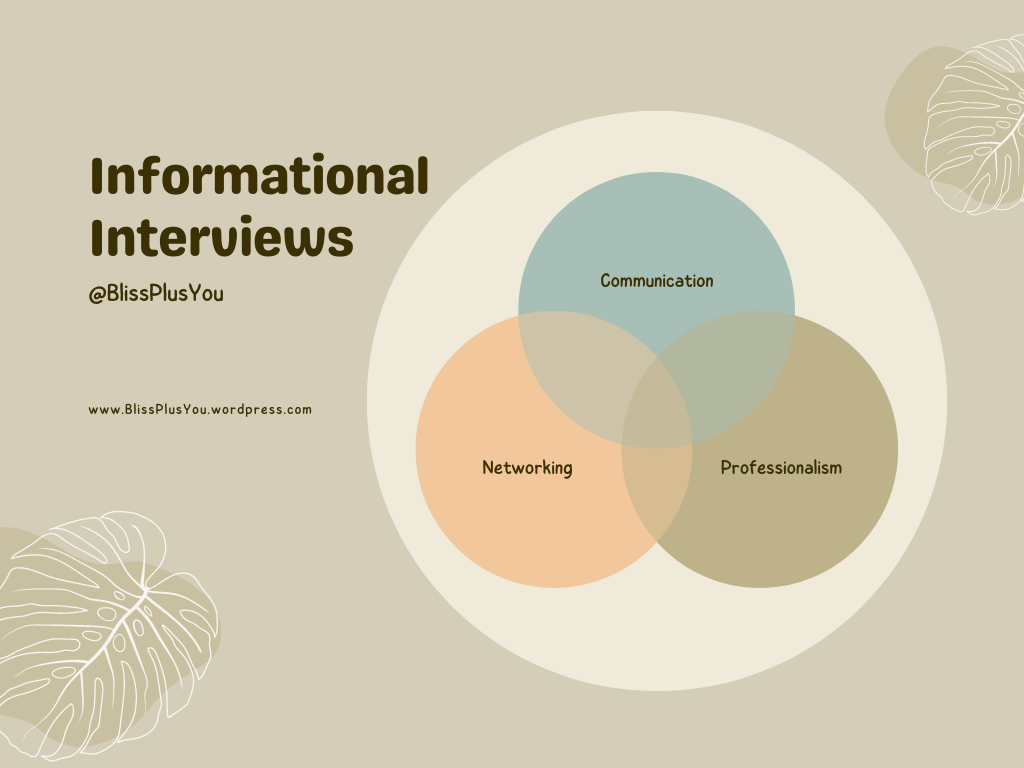
4 Steps to Successful Informational Interviewing

The topic of informational interviewing makes a lot of people nervous. Concerns like how do I get started, where do I go to meet people, how do I use social media to ask about an informational interview, and what do I say during an informational interview are often big concerns that individuals have.

The truth is that informational interviews make people uncomfortable or uneasy. But it doesn’t have to be this way. Informational interviews are an activity that when done correctly can reap the rewards and ongoing relationships.

Let’s start with knowing why informational interviews are helpful:

  • It can help you get your name known or your foot in the door of an industry you are interested in.
  • Learn about new career paths or the exciting career paths of other professionals.
  • Gain insight and information about career prep for your industry.

How to get an informational interview:

Think about what you want and who you want to connect to – Thinking about who you want to connect with during an information interview is key to getting started. It would be hard to target a specific person or industry if you didn’t know who you wanted to connect with or where you wanted to go. Start with doing some research on who and why you want to meet. Think about your selected industry. Who is there making waves? Who are you acquainted with?

In addition to this, think about the industry you are interested in. Get up to date with the latest news through journals, industry magazines, professional associations, and speak to career leaders in the industry.

Select your target people to connect with – Once you have thought about who you want to meet and now know some of what is going on in the industry, you are prepared to select who you want to meet with.

First, start with your contacts. Reach out to those people for a simple “catch up” or even request a formal meeting. What if someone is not directly in a field that you are in but you still want to reach out to them? Go ahead anyway! These people could connect you with the right people in your perspective industry to have an informational interview with.

What to say when asking for an informational interview – When you are connecting with someone first think about how you want to introduce yourself. Have an elevator pitch ready. Have it consist of who you are, why you are interested in the field, and some questions you can ask the targeted person. Be engaging and ask for the interview after some interaction with the person.

Also, think about how you want to contact them. Is it through social media, phone, or email? When writing to this person be clear that it is information you are looking for rather than a job. Tell them how you got their contact. Then ask if you can have 20 to 30 minutes of their time to chat about your questions.

Day of the interview – When meeting with the person whether it be online or in-person dress for the occasion. You always want to appear professional. Treat it like a business meeting, arrive early and have your questions prepared. Thank the person for their time, while ensuring an engaging conversation, not just a transaction.

Remember to tell them what your objective is and let them know a little bit about you concerning how it applies in the meeting. An informational interview typically lasts between 20 to 30 minutes.

Always leave the meeting having made a connection with the opportunity to stay in touch if both parties agree. In addition to this send a follow-up note within 2 days of meeting with this person and let them know what you learned from the conversation.

So, there you have it, an informational interview is a reliable source of networking even though it may take more time than regular networking. It is a strategy to get to know someone on a more personal basis while making a connection.

Have more questions? Send me an email through the contact page or connect with me on Instagram @BlissPlusYou.

The Cover Letter: Do you need it and why?

Cover letters. People ask all the time if they need them. There is a yes and no in that answer. On one point the cover letter is an excellent chance for you to explain to the employer why you would be a great candidate for the role – while having some space to specifically explain in more detail your skills while making a personal introduction to the hiring manager.

The long and short of it is if the job posting asks for a cover letter always provide one. Also, if you want to make a better impression and show effort and interest in the posting, then always choose the cover letter. Consider using a cover letter when you feel you have more to tell the employer than your resume will allow. This will allow you to tell the reader more about yourself and how your skills will be relevant to the job and the company.

Wondering how to write a cover letter? Let’s take a look:

How long should my cover letter be?

Typically, the cover letter should be no more than four to five paragraphs. This includes your introduction and conclusion. The middle two to three paragraphs should be used to explain how you as an individual can help the employer, along with how your skills are relevant to the position. Typically, a paragraph is three to four sentences.

What should I say in my cover letter?

When writing your cover letter, start with the why. Think about why you are applying for this job.

In the introduction paragraph say what position you are applying for, the company name, and why you find the company or position interesting.

Moving on to the second to third paragraphs – when writing these paragraphs think about a theme for each paragraph. Don’t just regurgitate your resume. They have your resume and they have probably already read it at this point. Think about expanding on a situation that you encountered in the workplace to explain how you could complement the role and company. For example, tell a story about a challenge you faced and how you overcame it.

Remember how I mentioned each paragraph should have a theme; this gives you two to three opportunities to point out your skills to the employer. Pick two or three things that are related to the job posting and explain how your skills could be of benefit to the employer.

Finally, in the conclusion of the letter simply state that you are excited to speak with them regarding the job opportunity and how you can be reached.

Can I use the same cover letter for all job postings?

This is not advisable. Each company and job posting are unique, and your cover letter should be too. It should never be a one size fits all approach when creating a cover letter.

What is the biggest tip you have for writing a cover letter?

My biggest tip when writing a cover letter is to not make it all about you. While having information about yourself in the cover letter is imperative, be sure to make the cover letter from a stance where you can show the employer how you can be of service to them. Explain how your skills can benefit the role and company, rather than how they can benefit you.

My talent, how do I explain that?

First things first, never explain in a cover letter where your skills fall short. But rather explain your transferable skills and how they can help make the role successful. Maybe the employer is looking for someone who has a lot of experience in excel, and that is an area you fall short on. Rather than explaining that you are willing to learn excel, explain what you have done in the past with the program and how you were able to help make the project a success.

And finally, know who you are writing to!

Always do your best to know who you are writing to. If it is a bigger company, it could be Human Resources, or the posting may have a name of who to address the letter to. Look at social media and get a sense of the company culture. This can help you gauge what tone and style to write your cover letter in.

So, there you have it! Cover letter essentials. If you are looking for more tips, or have questions, connect with me on Instagram @BlissPlusYou.