How to Spot Job Scams in Canada: Protect Yourself While Job Searching

Searching for a job can be exciting—but it can also make you a target for scammers. Job scams are on the rise in Canada, especially with the growth of remote and online work opportunities. Being aware of the warning signs can help you avoid losing money, personal information, or even your peace of mind.

Here’s what you need to know to stay safe.


1. Be Wary of “Too Good to Be True” Offers

If a job promises an unusually high salary for minimal experience or effort, it’s a red flag. Scammers often lure job seekers with offers that seem far better than the market rate to get them to act quickly.

Tip: Research the typical salary for that role in Canada. If it’s significantly higher than average, proceed with caution.


2. Avoid Jobs That Require Upfront Payments

Legitimate employers will never ask you to pay for:

  • Application processing fees
  • Training or certification costs
  • Equipment purchases

Any employer requesting payment is likely a scam.


3. Watch for Suspicious Communication

Red flags in emails or messages include:

  • Personal email addresses (Gmail, Yahoo, etc.) instead of a company domain
  • Poor grammar or spelling errors
  • Pressure to act immediately
  • Unusual methods of contact, like WhatsApp, Telegram, or social media DMs

Always verify the company’s contact information and official website.


4. Research the Employer

Before sending your resume or personal information:

  • Check the company’s official website and LinkedIn page
  • Look for online reviews or scam reports
  • Verify that the recruiter’s profile is legitimate

If something feels off, trust your instincts.


5. Protect Your Personal Information

Never share sensitive information until you’ve confirmed the employer is real. This includes:

  • Social Insurance Number (SIN)
  • Bank account details
  • Copies of ID, passport, or driver’s license

Sharing this information too early can lead to identity theft.


6. Common Job Scam Types in Canada

Some of the most common scams include:

  • Work-from-home scams: Requests to cash cheques or buy supplies
  • Pyramid schemes: Promises of high income for recruiting others
  • Fake job postings: Using real company names to appear legitimate
  • Phishing schemes: Emails that steal login credentials or personal info

7. What to Do If You Encounter a Scam


Final Thoughts

Job scams can be convincing, but vigilance is your best defense. By researching employers, protecting your personal information, and trusting your instincts, you can focus on genuine opportunities and avoid falling prey to fraud.

Remember: a legitimate job offer will never make you feel rushed, pressured, or forced to pay upfront. Stay informed, stay cautious, and keep your career search safe.


Making your workspace work for you

We all have one place we must be for long periods of time – that is our workspace. If you work at a desk, then setting up alternatives is super important for when you just need another spot to be for a while. Here are simple strategies to make your workspace work for you, along with an alternative desk arrangement. Read to the bottom of the blog for details on a giveaway!

1. Ergonomic Adjustments

Invest in an ergonomic chair and desk to support proper posture and reduce strain. Adjust your chair so your feet are flat on the floor, and your knees are at a right angle. Position your computer monitor at eye level to avoid neck pain. Consider using a keyboard tray or wrist support to minimize discomfort during typing.

2. Personalize Your Space

Add elements to your workspace that reflect your personality and bring you joy, such as photos, plants, or art. Greenery, like a small potted plant or succulent, can improve air quality and boost your mood. Personal organization tools, like a favourite mug for pens or a colourful notepad, can also make your desk feel more inviting. Make sure that you have the right tools too – a comfortable headset, an enlightening background (mine has an encouraging quote), a second screen if you have a laptop, different coloured pens for easier scheduling if you use a traditional agenda, and file organizers.

3. Optimize Lighting and Temperature

Ensure your workspace has adequate lighting to reduce eye strain and headaches. Natural light is ideal, but if that’s not possible, use a desk lamp with adjustable brightness. Maintain a comfortable temperature in the room, using a fan, heater, or even a cozy toque during colder months to stay warm. Adjust window coverings to control glare and sunlight as needed.

4. Change Where You Work at Times

Recently, I discovered the Anthrodesk Laptop Table from Anthrodesk. It is a great tool, especially for someone like me who works from home. When you work from home, being in the same space all the time without other co-workers around can get daunting. So the Anthrodesk Laptop Table has allowed me to work from different spaces in my home. It is adjustable with several positions you can put it in for working in your living room to working in your bed. It has an adjustable desktop and a place you put your mouse. If you are looking for an alternative to your everyday environment, I suggest checking out the Anthrodesk Laptop Table. Bonus – it is also collapsible, so you can take it on the go.

In addition to this, those who comment on this blog will be entered into a random draw for winning their very own Anthrodesk Laptop Table. ***Open to Canadian residents only until December 20th, 2025.

Prepare Today, Succeed Tomorrow: How to Get Ready for Your Best Year Yet — and How My Workshops Can Help

A new year always brings new possibilities — but success doesn’t happen by accident. The people who make real progress in their careers are the ones who prepare early, invest in themselves, and take strategic steps long before opportunities show up.

If you want 2026 to be your breakthrough year, now is the perfect time to start laying the groundwork.

And that’s exactly where my workshops come in.

From finding your ideal career path to refreshing your résumé for the modern job market, each workshop is designed to help you build confidence, clarity, and momentum — before the new year even begins.


Why Preparing Now Sets You Ahead

Most people wait until January to start thinking about their goals. That means you have a chance to be months ahead simply by starting now. Preparing early helps you:

  • Clarify your direction so you’re not guessing your way through the job market
  • Strengthen your professional tools like your résumé and career story
  • Identify gaps in your experience or skills before you’re in crunch mode
  • Walk into 2026 with confidence instead of scrambling to catch up

Preparation isn’t about being perfect — it’s about being ready.


How My Workshops Help You Prepare for 2026

1. Find Your Best Career – Virtual Workshop

If you’ve been feeling stuck or unsure about what you want next, this workshop takes you step-by-step through discovering your strengths, passions, and ideal career direction.
You’ll walk away with clarity and a customized plan for where you want to go in 2026.

2. New Year, New Résumé – Virtual Workshop

Your résumé is often your first impression — and it needs to highlight your value clearly.
In this workshop, you’ll learn how to:

  • Revamp your formatting so it’s clean and modern
  • Use powerful wording that attracts employers
  • Align your résumé with the jobs you want (not just the jobs you’ve had)
  • Avoid the mistakes that hold applicants back

By the end of the session, you’ll have the tools to create a résumé that opens doors in the new year.


Tips You Can Start Using Now

Even before you attend a workshop, there are things you can start doing today:

✔ Reflect on what you really want

What kind of work energizes you? What do you want more — or less — of in 2026?

✔ Update your accomplishments

Write down your wins from this year. These often get forgotten later!

✔ Refresh your LinkedIn profile photo and headline

Small updates make a powerful difference.

✔ Begin exploring job postings in your field

This helps you spot trends and understand what employers are looking for.

✔ Commit to your own growth

Investing in yourself now positions you for success later.


Let 2026 Be the Year You Rise

Your future career success starts with the decisions you make today.
If you’re ready to take action, get clarity, and position yourself for opportunities, my workshops are built to guide you through every step.

Don’t wait for the new year — prepare for it.
Because the people who plan ahead are the ones who thrive.

Ready to get started?
Join a workshop and take the first step toward your brightest year yet.

Finding Strength and Clarity After Job Loss

Losing a job is one of the most emotionally and mentally challenging experiences many people face in their careers. It can feel like the ground has shifted beneath you, disrupting your routine, your sense of stability, and sometimes even your confidence. Yet, as difficult as this moment is, it can also become a powerful turning point—an opportunity to reflect, reset, and redirect your career with intention.

When something unexpected happens in our careers, our first instinct is often to question it. Why did this happen? What did I do wrong? What now? These questions are normal, but they can also keep you stuck in fear or self-doubt. Instead, this period of transition can invite you to look at the situation through a different lens. Rather than focusing solely on the loss, consider asking yourself more empowering questions: What is this change creating space for? What new possibilities might be opening that I couldn’t see before?

This shift in perspective doesn’t ignore the real emotional weight of job loss—it acknowledges it while also allowing you to move forward with clarity rather than panic.

A career transition offers a unique opportunity to reconnect with yourself. When the constant motion of daily work comes to a stop, you may begin to see things differently. Many people realize their previous role wasn’t aligned with their strengths, values, or long-term goals. Others discover they were operating on autopilot, completing tasks without feeling fulfilled or inspired.

This is a moment to reflect deeply. Ask yourself:
What type of work feels meaningful and energizing?
What strengths do I naturally lean into when I’m at my best?
What direction feels aligned with who I am becoming, not just who I have been?

Taking time to answer these questions can help you approach your next step intentionally instead of reactively. Instead of rushing into the first available role out of urgency, you can create space to choose a path that genuinely fits.

Confidence can also be rebuilt during this period. Losing a job can make anyone—even high achievers—question their worth. But your value has never been defined by a job title. You still carry your skills, accomplishments, experience, adaptability, and resilience. These internal resources do not disappear when a job ends; they are exactly what will help you move toward the next opportunity.

As you navigate the weeks ahead, consistency will matter more than speed. Small steps build momentum—updating your résumé, reaching out to your network, taking a course, exploring new industries, or simply setting aside time to plan your next move. These actions create clarity and strengthen your confidence.

A job loss is not the end of your story; it may be the beginning of a more aligned chapter. This moment can serve as a reset—an opportunity to reflect on what you truly want and move toward it with renewed purpose. Be patient with yourself, trust your strengths, and remember that you’re not starting over—you’re starting forward.

The Benefits of Returning to the Office: Finding Balance in a Changing Workplace

After years of remote and hybrid work, many organizations are encouraging employees to spend more time in the office—and for good reason. While working from home offered flexibility and comfort, there’s a growing recognition that in-person collaboration brings unique advantages to career growth, connection, and overall well-being. As more professionals transition back to office life, it’s worth exploring how this shift can create a more balanced and fulfilling work experience.

Stronger Collaboration and Communication

One of the biggest benefits of working in the office is the ease of collaboration. While virtual meetings and messaging platforms helped teams stay connected, they can’t fully replicate the spontaneous conversations that spark innovation and problem-solving.
In-person interactions allow for quick clarification, brainstorming sessions, and real-time feedback—all of which help teams work more efficiently and creatively. Being physically present also helps reduce miscommunication that can happen over email or chat, leading to smoother workflows and stronger team dynamics.

Building Meaningful Connections

Relationships play a key role in career development. Working in the office fosters a sense of community, belonging, and trust that can be harder to build remotely.
From casual coffee chats to team lunches, these small, organic moments strengthen workplace culture and create opportunities for mentorship and support. For new employees, being in the office helps them integrate into the company faster, understand its culture, and form valuable professional connections.

Career Visibility and Growth Opportunities

When you’re in the office, you’re more visible—to your manager, colleagues, and leadership. This visibility can naturally lead to more opportunities for growth, recognition, and promotion.
Face-to-face interactions make it easier to showcase your skills, contribute to projects, and demonstrate leadership potential. It’s also easier to receive on-the-spot feedback and coaching from supervisors, which can help accelerate professional development.

Clearer Boundaries Between Work and Home

While working from home provided convenience, it often blurred the line between professional and personal life. Many professionals found it difficult to disconnect, leading to burnout or feelings of isolation.
Returning to the office reestablishes structure and balance. The physical separation between home and work helps individuals stay focused during office hours and fully relax once the day is done. The commute—once viewed as a hassle—can even serve as valuable transition time to mentally prepare for or unwind from the workday.

Boosting Motivation and Team Energy

There’s something powerful about being surrounded by motivated colleagues. The energy of an active office can help boost morale and productivity.
Seeing others working toward shared goals fosters accountability and momentum—it’s easier to stay motivated when you’re part of a dynamic, collaborative environment. Many employees also report feeling more engaged and inspired when they can share ideas and celebrate wins together in person.

Learning Through Observation

In-person work environments offer unique learning opportunities. Simply observing how others handle challenges, communicate with clients, or manage time can be an invaluable form of professional development.
Younger professionals and new hires especially benefit from this exposure, as it allows them to learn workplace etiquette, teamwork, and problem-solving in real-time—skills that are often harder to absorb through remote work.

Finding the Right Balance

While returning to the office offers significant benefits, it doesn’t mean flexibility should disappear. The goal for many organizations is to strike a balance—blending the connection of in-person work with the autonomy of remote options.
For professionals, the key is to focus on the advantages that office life brings: collaboration, learning, and personal growth. As workplaces continue to evolve, embracing time in the office can open the door to new opportunities, stronger relationships, and a renewed sense of purpose at work

Navigating Career Transitions with Confidence

Change is one of the few constants in today’s world of work. Whether it’s moving into a new industry, taking on a different role, or stepping back into the workforce after time away, career transitions can feel both exciting and overwhelming. If you are considering a change, know that you’re not alone—many professionals will experience multiple transitions over the course of their careers.

While the path may feel uncertain, career transitions are opportunities for growth, reflection, and reinvention. Here are some strategies to help you navigate the process with confidence.


1. Reflect on Your “Why”

Before making any move, pause to reflect on what’s driving the desire for change. Are you seeking more fulfillment, flexibility, stability, or growth? Understanding your motivation provides clarity and helps you choose opportunities aligned with your values and long-term goals.

Tip: Write down three non-negotiables for your next role. These can serve as your compass during the job search.


2. Identify Transferable Skills

Many people worry about “starting over” when they change careers. The truth is, you’re bringing a wealth of transferable skills with you—communication, leadership, problem-solving, and adaptability are valuable in almost any industry.

Tip: When updating your résumé or LinkedIn profile, frame your experiences in terms of these transferable strengths. Employers want to see how your skills can add value in their environment.


3. Bridge the Gaps

Sometimes a career change requires building new skills. Whether through online courses, certifications, or volunteer opportunities, investing in yourself can make you more competitive and confident as you enter a new field.

Tip: Even small steps—like taking a short course or attending an industry webinar—show initiative and help you speak the language of your desired field.


4. Leverage Your Network

Networking is one of the most powerful tools during a transition. Reach out to former colleagues, mentors, or professional associations. Often, opportunities come from conversations rather than job boards.

Tip: Don’t just ask for jobs—ask for advice, insights, and introductions. People are often more willing to help than we expect.


5. Practice Patience and Persistence

Transitions rarely happen overnight. It may take time, trial, and even rejection before the right opportunity comes along. Patience paired with persistence is key. Every step you take—updating your résumé, applying for roles, having conversations—moves you closer to your goal.

Tip: Celebrate small wins along the way, whether that’s landing an informational interview, getting positive feedback, or learning a new skill.


Embracing the Journey

A career transition can feel daunting, but it’s also a chance to design a future that reflects who you are and who you want to become. Remember: your career is not a straight line. Each shift adds depth, resilience, and experience that will serve you in the long run.

The question isn’t “Am I ready?”—it’s “Am I willing to take the first step?”

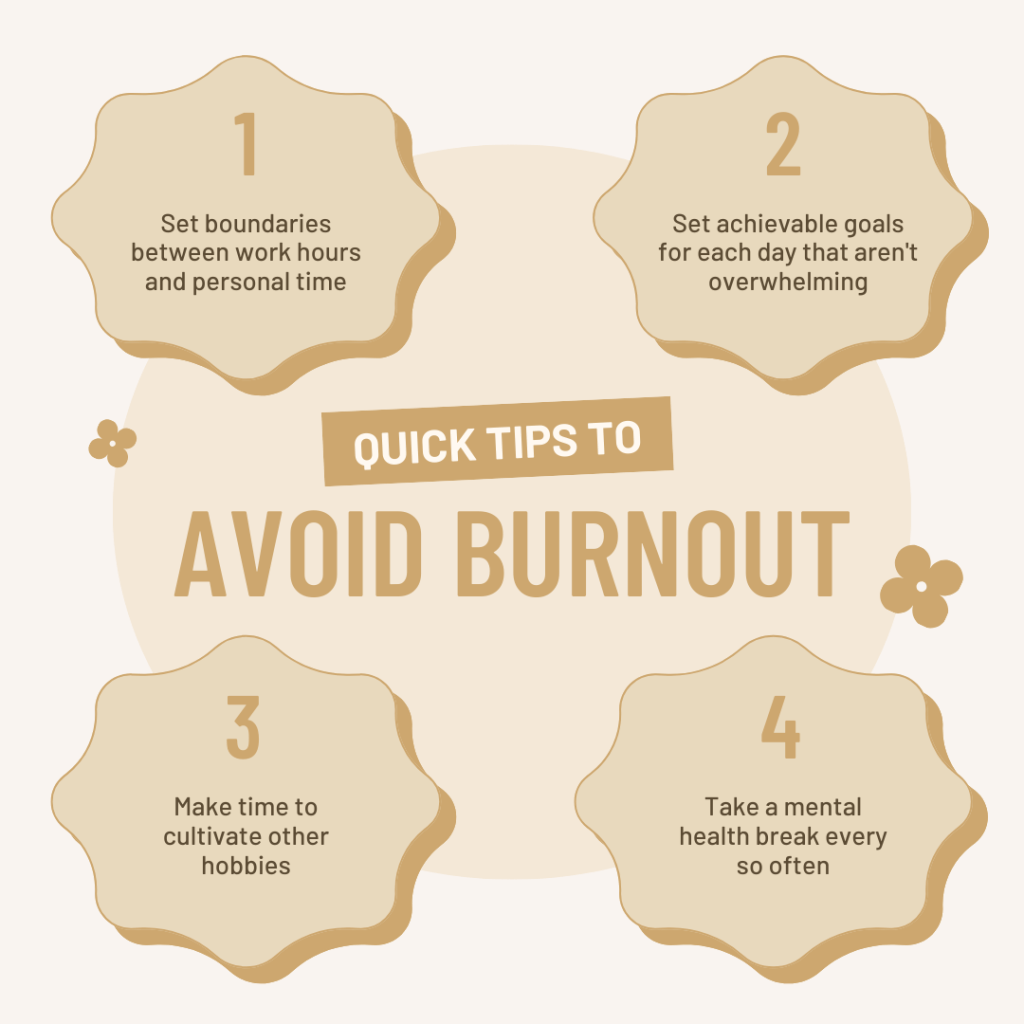
How to Avoid Burnout in Your Career

Burnout is a chronic problem in the professional landscape today. Individuals are taking on more and more work and are prone to exhaustion. With budget cuts which often lead to more workload requirements in work roles, people are often not sure how to handle the stress and prevent burnout.

Here are a few ways to recognize and avoid burnout:

  1. You feel tired even after you rest and often don’t get a good night’s sleep.
  2. You find yourself lacking motivation and don’t care about things in daily life anymore, almost as if you feel a detachment.
  3. Performance isn’t at its peak anymore. You do just enough to get by.
  4. Stress can lead to illnesses that you may experience. Increased sickness can occur. You may even feel more mood swings or irritability that doesn’t match your regular personality. 

What to do about it:

  1. Set boundaries – Know when something is too much and when to say no. Do you have too many extra activities or volunteer gigs? Shed some and focus on only a few things and do them well.
  2. Take breaks – Use your paid time off, take a real vacation where they won’t call you, turn your work phone off after 6 pm, and enjoy your weekends. Before you accept a job, inquire about what after-hours requirements are or if on-call is required.
  3. Work on yourself – Take time out for regular personal development, whether that is meditation, reading, personal care, exercise, etc. Don’t forget to ask yourself how you feel regularly and avoid going through life in a reactive auto-pilot phase. Get professional help when you need it.
  4. Find meaning in your work – Focus on where you enjoy your job. Do you have an idea that might be beneficial to the workplace? Share that idea and see if you can implement it.

Burnout is chronic in our society. The fast-paced way of the world is beginning to take its toll on people leading to illness and stress. Remember to prioritize your own needs. You can’t pour from an empty cup.

Wellness Strategies for Your Career

Career wellness is a topic that everyone needs to explore. All too often are we stuck in a job that drains us. When I talk about career wellness, I don’t necessarily mean quitting your job. Career wellness can be staying in your current job and changing your mindset, it could be moving on to your own entrepreneurial endeavor, or it could actually mean switching jobs. It depends on what your personal needs are and the circumstances of your situation.

To encounter wellness in your life and career there are several methods you can use to achieve this. It can be anything from mindfulness and meditation to changing your routine. Today I am going to give you some strategies to manage your mindset while helping you to improve your career experience.

Get Involved at Work

If you are in a situation where you work for a larger company there are usually opportunities, programs, or training that you can get involved in. Have a chat with your manager and let them know that you are interested in getting more involved at work. There could be other roles you could apply for, volunteer opportunities, training you can take to improve your knowledge at work, and even job shadowing. Getting more involved and doing more training can help you to get to know other people in your organization – networking – and can help you to expand into new roles. Getting involved at work can also involve volunteering to arrange things like potlucks and help plan company parties and outings.

Finding a Career that Aligns with Your Values  

We all have values that we hold. Knowing what they are is important, and if you aren’t sure what your values are, take some time to journal and brainstorm what you think your values are. Once you have determined your values begin to research some companies that do meaningful work that interests you. When you are in a larger urban area it may be easier to find these opportunities. However, if you are in a smaller community finding job opportunities online could be a possibility. Since the pandemic ended a lot of companies are going online. If entrepreneurship interests you then consider starting your endeavor, nonprofit, or company to align with your values and interests.

Balance Between Home and Work

Many of us find it difficult to balance our work and life, especially for those who work long hours and on top of that have a long commute. I get it! I have been there at a job with a 2-hour one-way commute. So how do you find balance for social, wellness, family, and other activities when you work in a role like this? First, find time to meet with friends and family close to work for dinner after work if possible, or if you are looking to keep your fitness intact start going to a gym closer to your workplace. Another thing to keep in mind is that you need time to take care of your mind, especially if you have long commutes. If you take the train to work listen to an uplifting podcast or read an inspiring book on your ride to work. If you drive, again a podcast or uplifting music can help on your commute. Schedule time for you to do things you truly care about and treat these activities as you would any other meeting. Try getting an agenda or scheduling these on your phone so you remember to take part in activities that give you relaxation.

Flexibility

One of the main keys to balance and wellness in your career is the ability to be flexible. Take breaks when you need them. Ask your workplace about flexible working options. Use your paid time off. Take mental health or wellness days when you need them. You can’t pour from an empty cup!

Creating a life that is based on your values and needs is important. Do you have questions about creating a career that matches your passions and needs? Contact me to discuss how career coaching can help you!

Preparing for the New Year

So, the New Year is upon us, and it is time to start preparing for your plans of self-improvement and wellness. Many people have an idea of what they want to achieve in the New Year – mostly a better version of themselves.

When setting your plans for the New Year it is important to break down your aspirations into smaller objectives and to avoid running out of the gate while trying to make too many changes at once. When you try to make too many changes at one time, you often end up resorting back to your old ways within a matter of weeks. The first week might be great, then by the second week something happens and throws you off track, and you slowly resort to your old habits. Making resolutions is more than just a promise to yourself, it is about changing your mindset and replacing old habits with new habits.

The first thing you will want to do is think about what you want to change and write it down. You can also get a goal planning journal, there are plenty of different ones you can get on the internet, these are full of great ideas and can help you to clarify your thoughts. If you choose not to get the journal, a plain notebook will work just as well.

Questions to ponder:

  1. What is my goal?
  2. When do I want to achieve it?
  3. Why do I want to achieve this goal? What is its significance?
  4. Who do I need help from?
  5. Where do I need to go?
  6. How am I going to break down this goal?

Do these questions for each goal you want to achieve. When you break down your goals into smaller tasks it will help you to know how to approach them. This will help you to create success and will allow you to see progress in your aspirations.

Another thing to consider is not to do all the goals at one time. Stagger them throughout the year. Start with the most achievable or important one first, then work your way through. This allows you to not overdo it by trying to do too many things at one time.

Remember – go slow, don’t be afraid to adjust your goals as you go along, and celebrate even the smallest accomplishments!

Looking for goal-setting worksheets? Join my Facebook group “Bliss + You Coaching” and download my worksheets which will be uploaded to the groups file section in late December 2024.

The job market may be challenging – but you can still be resilient  

In many job markets right now, it is an employer’s market. People are looking for more jobs than vacancies are available. Maintaining balance and not wearing yourself thin in circumstances like we are currently experiencing is essential to maintaining wellness and self-security.

Wellness in your career can be practiced no matter what stage you are in, whether it is looking for a job or currently in a role that isn’t making you feel your best.

This article will focus on individuals who are currently looking for work and how they can maintain wellness, despite a challenging job market.

What can you do to maintain wellness during a job search? Decide to repeat the same thing every day of logging on to your computer and looking for work via the internet? Try a few of the suggestions below.

Focus on building skills – Look for courses on websites such as Coursea, Udemy, and edX. These websites offer various courses on almost any topic or skill that you are looking to build. They are a great addition to your resume, and you can also earn micro-credentials and certificates. I have taken a few courses here and found them very helpful in gaining insight into new topics that I am interested in while using them to build my resume.

Volunteer – Get involved with something you are passionate about. Whether it is joining a board of directors, helping in a soup kitchen, or volunteering in a position related to your career path, or where you would like your career path to go. Volunteering means meeting new people, which equals easy networking opportunities. Not only are you keeping busy, but you can build your resume, and you never know who you will meet.

Practice self-care and mindfulness – Self-care is more than going to the spa. While going to the spa is a form of taking care of yourself, there are other ways to practice self-care and mindfulness. This includes reading inspiring books, journaling, meditation, and getting your body moving, among other things you can do. When you are undergoing a job search, you tend to get focused on just finding a job. Life can be stressful. This is why it is important to take care of yourself, mentally, physically, and spiritually.

Network – I know you hear it a lot. And if you follow my blog, you have heard me talk before about networking. Networking over time when maintained properly can lead to new job opportunities, friendships, business opportunities, new clients, and more. The important aspect of networking is to see how you can help others. One main thing to remember when networking is that it’s not always what others can do for you, but how you can collaborate.

Consider doing a side gig – A side gig can be anything from freelance work on websites like Upwork and Fiverr, to creating crafts and selling them at local markets. While these two examples are opposite, the point is that you can use your time off to pursue the passions you have. Not only will they bring in extra money while you are off, but you could decide to make your side gig into a full-time business. In 2012 I started writing resumes as a side job. Within 2 years I started my own business as a Career Coach.

While the job search can be daunting, use your free time as an opportunity to do some self-exploration and determine who you are as a person, and what type of role you truly want for your next career venture.